Third Trimester Nutrition: Your Most Common Questions, Answered
Quick Answer: Third trimester nutrition priorities shift toward increased protein and iron needs, smaller and more frequent meals to manage reduced stomach capacity, and continued attention to calcium and DHA for the baby’s rapid late-pregnancy growth — most common questions in this trimester come back to managing discomfort (heartburn, fullness) while still meeting these increased nutrient needs. This is general information, not medical advice — always follow your OB or midwife’s individual guidance.
The third trimester brings a specific, practical set of nutrition questions as baby’s growth accelerates and physical space for eating comfortably shrinks — here are the ones that come up most.

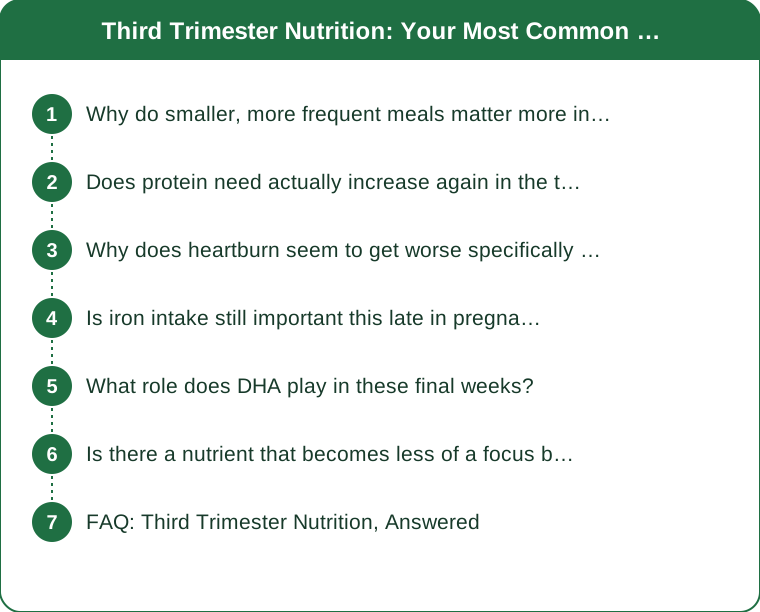
Why do smaller, more frequent meals matter more in the third trimester specifically?
As the uterus takes up increasing abdominal space, stomach capacity is physically reduced, which is why large meals often trigger discomfort, heartburn, or a feeling of fullness far sooner than earlier in pregnancy. Five or six smaller meals spread through the day, rather than three large ones, tend to be more comfortable while still allowing adequate total daily nutrition to be reached.
Does protein need actually increase again in the third trimester?
Yes — protein needs rise further in the third trimester to support the rapid fetal growth occurring in these final weeks, with many guidelines suggesting an additional 25 grams per day above pre-pregnancy needs. Reaching this through the day across smaller meals, rather than one large protein-heavy meal, tends to work better alongside reduced stomach capacity.
Why does heartburn seem to get worse specifically in this trimester?
Reduced stomach space combined with pregnancy hormones relaxing the muscle that normally keeps stomach acid down both intensify heartburn in the third trimester, which is why smaller meals, eating more slowly, and avoiding lying down immediately after eating are commonly recommended alongside continued nutrient-dense eating.

Is iron intake still important this late in pregnancy?
Iron needs remain elevated through the third trimester as the baby builds iron stores for the first several months after birth, and maternal blood volume continues to expand, both of which increase the risk of third-trimester anemia if intake isn’t adequate — this is often checked via bloodwork later in pregnancy specifically for this reason.
What role does DHA play in these final weeks?
DHA (an omega-3 fatty acid) supports rapid brain and eye development that accelerates specifically in the third trimester, which is why many prenatal guidelines specifically emphasize DHA-rich foods (fatty fish, algae-based supplements) or continued supplementation through these final weeks rather than treating it as a first-trimester-only priority.
Is there a nutrient that becomes less of a focus by the third trimester?
Folate needs, while still important, are relatively less critical by the third trimester compared to the neural-tube-development-critical first trimester window, though most guidelines still recommend continuing a prenatal vitamin throughout pregnancy rather than adjusting nutrient focus independently.
FAQ: Third Trimester Nutrition, Answered
What foods commonly worsen third-trimester heartburn?
Spicy, fried, or highly acidic foods (citrus, tomato-based dishes) are commonly reported to worsen heartburn in the third trimester, though individual triggers vary.
Is it normal to feel less hungry overall in the third trimester despite needing more nutrients?
Yes — reduced stomach capacity can make appetite feel smaller even as nutrient needs increase, which is exactly why nutrient-dense smaller meals matter more than volume in this trimester.
Should I be concerned if I’m not gaining weight as quickly in the final weeks?
Weight gain patterns naturally vary in the final weeks and this is best discussed directly with your OB or midwife, who can assess it alongside your individual pregnancy specifics.
TL;DR:
- Smaller, more frequent meals accommodate reduced stomach capacity in the third trimester
- Protein and iron needs remain elevated, supporting rapid late-pregnancy fetal growth
- Heartburn often worsens due to both reduced space and hormonal changes affecting digestion
- DHA remains a priority for brain and eye development accelerating in these final weeks
This is general information, not medical advice — always follow your OB or midwife’s specific guidance for your third trimester nutrition needs.
See It in Motion
Seen here: Maternity Capris with Side Pockets — shop it on bubblelime.com
Keep Reading
This article is for general informational purposes only and is not medical advice. Always consult a qualified health professional for guidance specific to you.