Autumn Pregnancy Nutrition: Your Questions, Answered
Quick Answer: The autumn-specific pregnancy nutrition priorities are vitamin D supplementation as sunlight drops, iron status as demand peaks in the third trimester, and food safety around seasonal foods. Warm, iron-rich, seasonal meals cover most of it without any special products.
The season changed and the questions changed with it.
Cravings are different. Appetite is different. And the advice you read in summer does not quite fit.
Here are the questions that come up most, answered in the order people ask them.
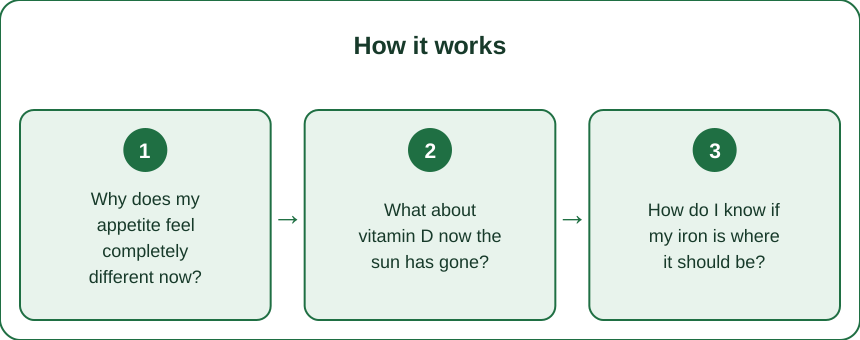
Why does my appetite feel completely different now?
Because two things shifted at once.
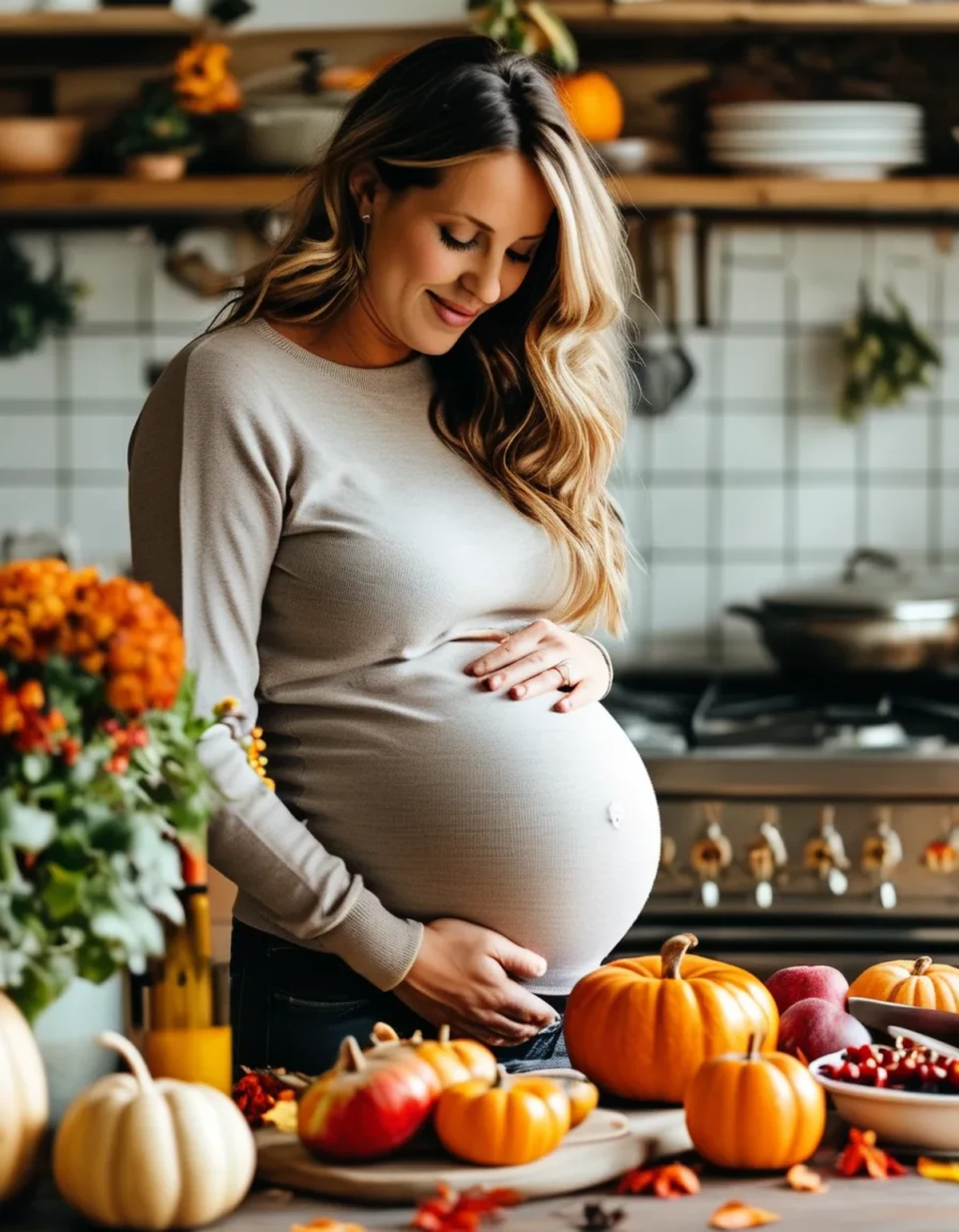
Pregnancy itself changes appetite on a trimester-dependent curve. Energy requirements rise by roughly 340 additional calories daily in the second trimester and around 450 in the third — modest numbers that are often overestimated. Appetite typically rises to match, and in the third trimester it can be complicated by a physically compressed stomach that makes large meals uncomfortable.
Autumn adds its own effect. Cooler weather raises energy expenditure slightly, and reduced daylight shifts cravings toward carbohydrate specifically through serotonin-related pathways. That is why the shift is usually toward warm, starchy comfort food rather than toward food in general.
Should I just eat more?
Mostly follow your appetite, with attention to composition rather than quantity. The third-trimester pattern that works best for most people is smaller, more frequent, more nutrient-dense meals — five or six rather than three.
Is it normal to want completely different foods than in early pregnancy?
Yes. Taste and smell sensitivity change substantially across pregnancy, and the foods that were impossible at 9 weeks are often fine at 30. Reintroduce things you wrote off earlier.
What about vitamin D now the sun has gone?
This is the most clearly autumn-specific item on the list.
Do I definitely need to supplement?
In most northern countries the guidance is yes. From roughly October through March, the sun does not reach an angle where skin can produce vitamin D at latitudes above about 37 degrees. The commonly recommended dose in pregnancy is 10 micrograms (400 IU) daily, and many pregnancy multivitamins include it.
Why does it matter more in pregnancy?
Vitamin D supports calcium absorption for fetal bone development, and deficiency is associated with a range of poorer outcomes. It is also one of the most common deficiencies in pregnant women at northern latitudes, and it is easily corrected.
Can I get enough from food?
Difficult but not impossible. Oily fish, egg yolks, and fortified foods contribute, but reaching the target from diet alone is unrealistic for most people in winter.
What about higher doses?
Do not self-prescribe above standard guidance. Vitamin D is fat-soluble and excessive intake carries real risks. If you suspect deficiency, ask for a test.
Confirm the specifics with your midwife or doctor — this is general information, not medical advice.
How do I know if my iron is where it should be?
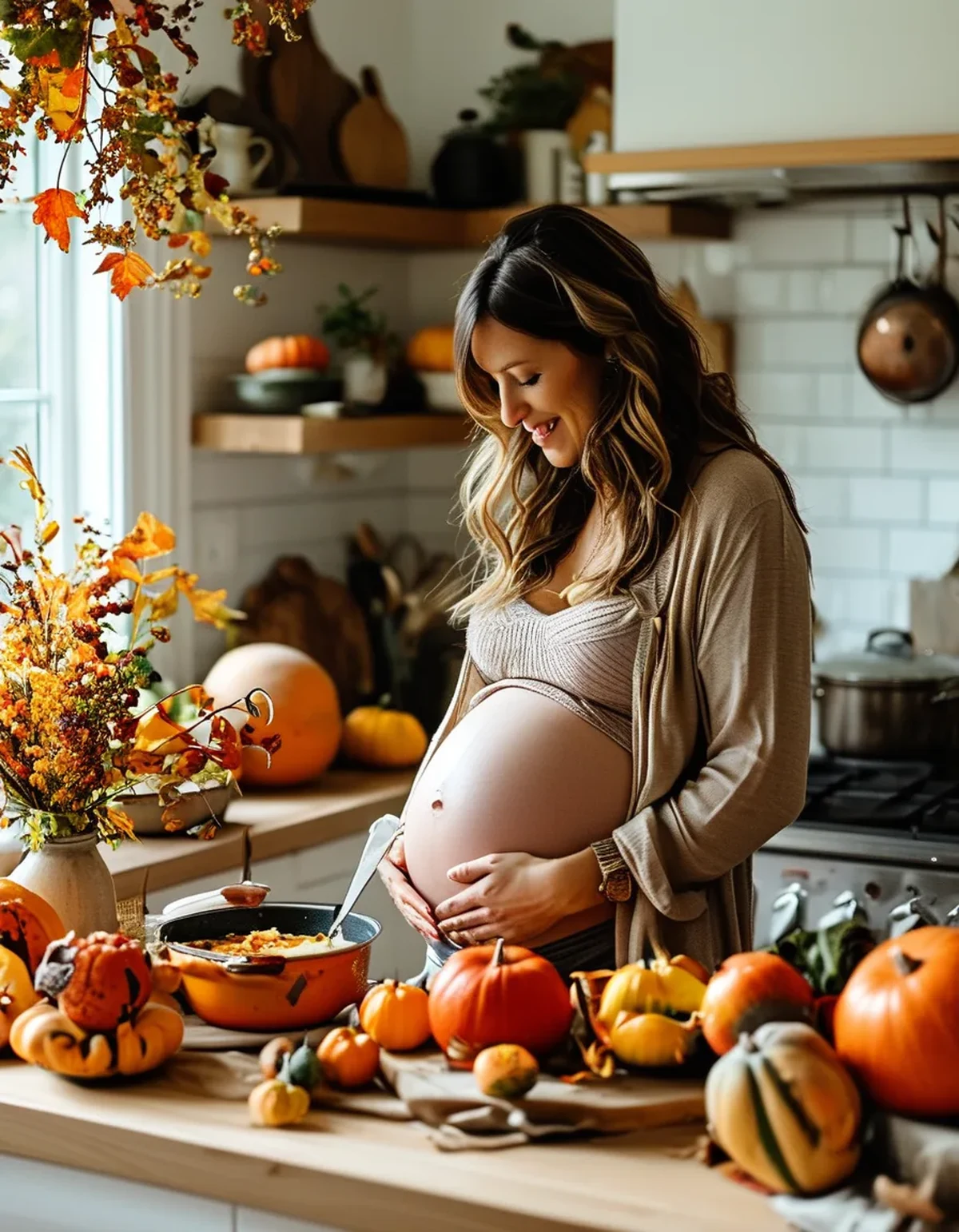
Iron demand rises sharply in the second half of pregnancy, and autumn tends to coincide with the third trimester for spring babies.
Why does it peak now?
Blood volume increases by 40 to 50 percent during pregnancy, and the fetus draws iron stores heavily in the third trimester. Requirements roughly double compared with pre-pregnancy.
What are the signs of low iron?
Fatigue beyond ordinary pregnancy tiredness, breathlessness on mild exertion, dizziness, and pale skin. The problem is that these overlap almost completely with normal late pregnancy, which is exactly why routine blood testing exists rather than symptom-watching.
Which foods actually help?
Red meat is the most bioavailable source. Beyond that: lentils, chickpeas, tofu, dark leafy greens, and fortified cereals.
The pairing that matters: plant-based iron is absorbed far better with vitamin C in the same meal. Lentils with tomatoes, spinach with lemon, beans with peppers. Conversely, tea and coffee with a meal reduce iron absorption substantially — move them to between meals.
Should I take a supplement?
Only if your test indicates it. Iron supplements have real side effects and are prescribed based on bloodwork, not on guesswork.
What seasonal foods should I be careful with?
A short and specific list, since autumn brings a few items that do not come up in summer.
Are unpasteurised ciders and juices a problem?
Yes — farm shops and markets often sell unpasteurised apple juice and cider in autumn, and these carry a listeria and E. coli risk. Check the label; pasteurised versions are fine.
What about soft cheeses at seasonal markets?
The standard pregnancy guidance applies: avoid mould-ripened soft cheeses and unpasteurised varieties. Hard cheeses and pasteurised soft cheeses are fine.
Is game meat safe?
Game is more common in autumn and carries two considerations — the lead shot risk in wild-shot game, which official guidance advises limiting in pregnancy, and thorough cooking. Farmed venison prepared well done is generally fine.
What about foraged foods?
Mushroom foraging peaks now. Unless you are genuinely expert, this is not the season to start — misidentification risk is not worth it in pregnancy.
Are there autumn foods that are especially good?
Plenty. Squash for beta-carotene, brassicas for folate, root vegetables for fibre, and oily fish within the recommended two portions weekly.
What does a practical week look like?
What should breakfast look like?
Warm and protein-containing. Porridge made with milk and topped with nut butter and stewed apple, or eggs with wholegrain toast. Aim for 20 to 25g of protein to steady the morning, and add vitamin C alongside any iron-rich element.
What is the most useful thing to batch cook?
A lentil and vegetable stew. It covers iron, fibre, and folate, freezes well, reheats in minutes, and suits a third-trimester appetite that wants small warm portions rather than large meals.
How do I handle heartburn with warm autumn food?
Smaller portions, eaten more slowly, and not lying down for an hour afterwards. Rich and heavily spiced dishes are common triggers — the seasonal shift toward them is often why heartburn worsens in autumn specifically.
What if I cannot face cooking at all?
Frozen vegetables, tinned pulses, precooked grain pouches, and a rotisserie chicken assemble into a genuinely adequate meal in six minutes. Convenience formats in the third trimester are a sensible allocation of energy, not a compromise.
How much water should I be drinking now it is cooler?
More than thirst suggests. Cool weather suppresses thirst while indoor heating increases fluid loss through breathing, and pregnancy raises fluid requirements substantially because of the increased blood volume. Around 8 to 10 cups daily is a reasonable target, and warm drinks count — herbal teas, broths, and warm water with lemon all contribute, which makes the target considerably easier to hit in autumn than in summer.
Do I need to change anything about caffeine as the season changes?
The limit stays the same — most guidance sits at 200mg daily, roughly two mugs of instant coffee or one strong filter. What changes in autumn is that people drink more of it, both because it is warm and because seasonal fatigue makes it tempting. Worth counting for a week if you have not recently, and remember that tea, cola, and chocolate all contribute to the total.
Is there anything I should stop worrying about?
Perfection. Consistent, adequate, and varied beats optimal, and the stress of trying to eat perfectly has its own cost.
TL;DR:
- Vitamin D supplementation is the clearest autumn-specific priority — 10 micrograms daily from October, per standard guidance.
- Iron demand peaks in the third trimester; pair plant iron with vitamin C and keep tea and coffee away from meals.
- Watch for unpasteurised autumn cider and juice, market soft cheeses, and foraged mushrooms.
- Small, frequent, warm meals suit both a compressed stomach and a seasonal appetite shift.
None of this requires special products or a complicated plan — a lentil stew, a supplement, and a bit of attention to what goes alongside your iron sources covers most of it. This is general information, not medical advice; your midwife or doctor should confirm anything specific to your pregnancy.
See It in Motion
Seen here: Maternity Capris with Side Pockets — shop it on bubblelime.com
Keep Reading
This article is for general informational purposes only and is not medical advice. Always consult a qualified health professional for guidance specific to you.