Do You Really Need Prenatal Vitamins If You're Eating Well?
Quick Answer: Yes — even a genuinely healthy diet rarely covers folate, iron, and choline at pregnancy-specific levels, because these needs jump higher than what typical eating patterns provide. A prenatal vitamin fills that specific gap; it isn’t a replacement for eating well, and eating well doesn’t replace it either.
You eat vegetables, you cook from scratch most nights, and your meals look nothing like the stereotype of a poor diet. So does the daily prenatal really matter, or is it just extra insurance you’re paying for? The honest answer depends on which nutrients you’re talking about.

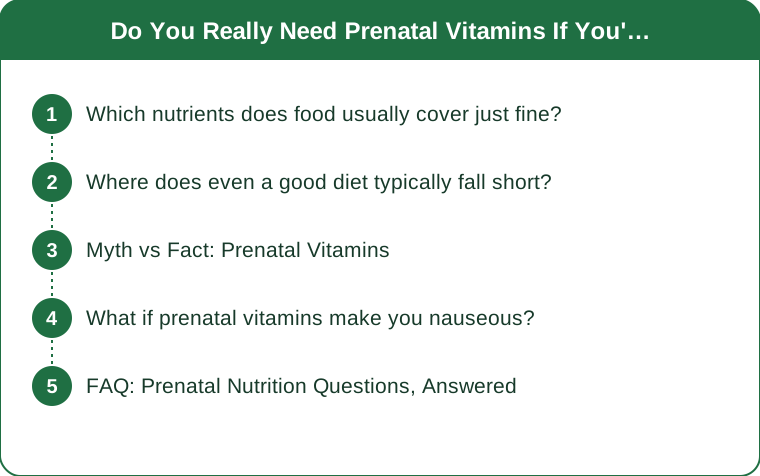
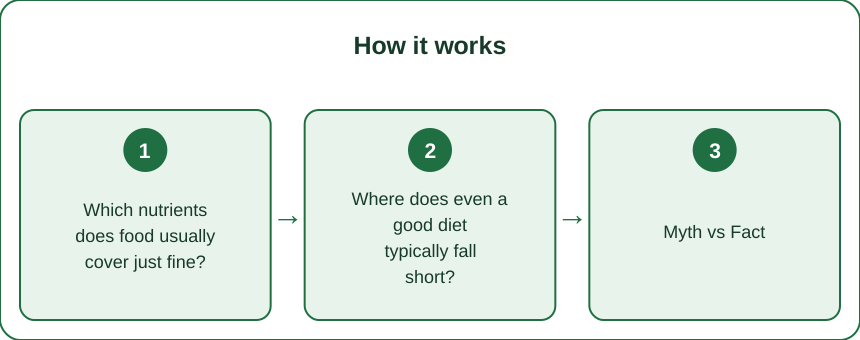
Which nutrients does food usually cover just fine?
Most pregnancy nutrient needs — protein, fiber, vitamin C, potassium — are reachable through a varied diet without much extra effort, especially if you’re already eating regular meals with vegetables, grains, and a protein source.
If your diet already looks reasonably balanced, you likely don’t need to worry about these categories specifically. The gaps tend to concentrate in a smaller list of nutrients where pregnancy requirements jump disproportionately higher.
Where does even a good diet typically fall short?
Folate/folic acid: the recommended pregnancy amount (600mcg) is hard to hit from food alone before you know you’re pregnant, which is exactly why it’s recommended starting before conception.
Iron: pregnancy nearly doubles iron needs (27mg vs. 18mg) to support increased blood volume — most diets, even iron-conscious ones, land well under that without supplementation.
Choline: this one is rarely on anyone’s radar, but recommended pregnancy choline intake (450mg) is genuinely difficult to reach through typical eating patterns; egg yolks are one of the few concentrated sources.

Myth vs Fact: Prenatal Vitamins
Myth: If you eat healthy, prenatals are just marketing. Fact: Folate and choline needs specifically jump enough during pregnancy that food alone rarely closes the gap, regardless of diet quality.
Myth: More prenatal vitamins is better insurance. Fact: Doubling up risks excess vitamin A and iron, both of which have upper limits in pregnancy. One prenatal as directed, not two, is the standard guidance.
Myth: Gummy prenatals are just as complete as pill versions. Fact: Many gummy formulas skip iron entirely due to taste, which matters if that’s your only prenatal source — check the label specifically for iron content, not just the word ‘prenatal.‘
What if prenatal vitamins make you nauseous?
This is common enough to have a standard set of fixes: take it with food instead of on an empty stomach, try it right before bed instead of morning, or switch to a version with less or no iron and get iron from food/a separate smaller supplement instead.
Don’t just stop taking it and hope food covers the gap — talk to your provider about a formula swap first, since the nausea is usually solvable without giving up the supplement entirely.
FAQ: Prenatal Nutrition Questions, Answered
Can you get enough folate from food instead of a supplement?
It’s difficult to hit 600mcg from food alone consistently, even with leafy greens and fortified grains in regular rotation — supplementation remains the standard recommendation for this specific nutrient.
Do you need a prenatal vitamin after the first trimester if nausea has passed?
Yes — needs like iron and choline stay elevated through the second and third trimesters, so the supplement’s job doesn’t end when morning sickness does.
Is it safe to combine a prenatal with a separate iron supplement?
Only with your provider’s guidance — total iron intake has an upper limit, and doubling supplements without checking your levels first can push past it.
TL;DR:
- A good diet usually covers protein, fiber, and vitamin C fine on its own
- Folate, iron, and choline are the specific gaps even healthy eaters typically miss
- One prenatal as directed beats doubling up — more isn’t automatically safer
- Nausea from prenatals usually has a fix (timing, food, formula swap) — don’t just stop taking it
This is general information, not medical advice — bring your specific diet and prenatal brand to your provider for a personalized check.
See It in Motion
Seen here: Maternity Capris with Side Pockets — shop it on bubblelime.com
Keep Reading
This article is for general informational purposes only and is not medical advice. Always consult a qualified health professional for guidance specific to you.