Pregnancy Snack Strategy: Feeding the 3pm (and 10pm, and 2am) Bump
Quick Answer: Pair every carb with protein or fat — apple with peanut butter, crackers with cheese, banana with yogurt — so blood sugar rises gently instead of spiking and crashing. Station snacks where hunger actually finds you (desk, handbag, car, nightstand), keep late-night options small and low-acid to avoid heartburn, and eat before you’re empty during nausea phases. Always check specific foods with your midwife or doctor.
Pregnancy hunger doesn’t consult your calendar. It files requests at 3pm, again at 10pm, and occasionally at 2am, with the negotiating style of a very small union boss who has never heard of business hours.
The solution isn’t willpower — you’re literally building a person, and that costs roughly 340 extra calories a day in the second trimester and 450 in the third. It’s logistics.

What’s the Best Way to Snack During Pregnancy?
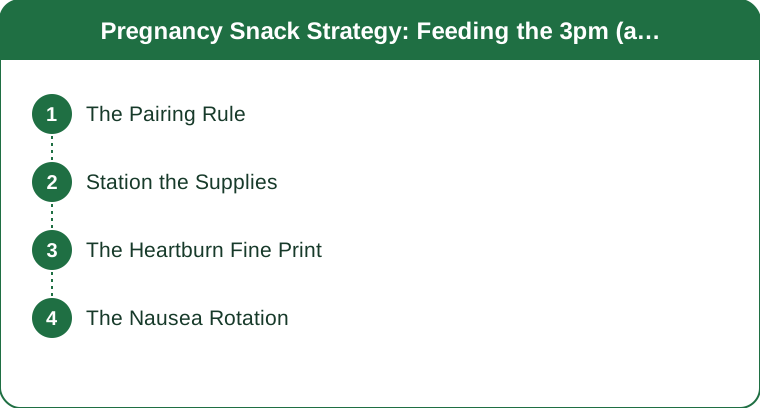
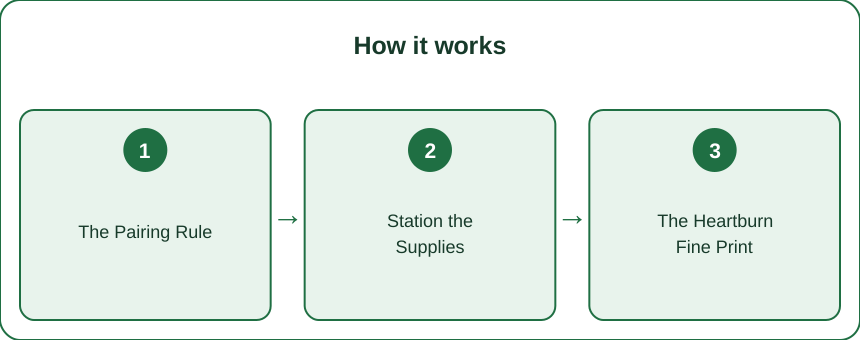
Pair every carbohydrate with protein or fat. That’s the one rule that does the most work.
A carb on its own — crackers, fruit, toast, a biscuit — digests fast, sends blood sugar up quickly, and drops it just as fast. Thirty minutes later you’re hungry again and slightly irritable about it. Pregnancy already makes blood sugar less stable, so the pattern is more noticeable than usual.
Add a protein or fat and the whole curve flattens out. The pairing slows digestion, so you get a gentler rise and a much longer stretch before the next demand.
Reliable pairs:
- Apple slices + peanut butter
- Wholegrain crackers + cheese
- Banana + Greek yogurt
- Carrots + hummus
- Wholegrain toast + a boiled egg
- Berries + cottage cheese
- A handful of nuts + a small orange
Aim for roughly 150–250 calories per snack and two to three snacks a day alongside meals, though this varies a lot by trimester and by person — your midwife or dietitian is the right guide for your specific numbers.
Where Should You Keep Your Snacks?
Wherever hunger is likely to find you, because a snack you have to go looking for is a snack that becomes whatever’s nearest with a wrapper on it.
The stations:
- Desk drawer — nuts, oatcakes, nut butter sachets, dried fruit
- Handbag — something that survives being carried: a cereal bar, a small bag of almonds
- Car — same rule, plus water. Traffic and pregnancy hunger is a genuinely miserable combination
- Kitchen counter, front and visible — the pre-portioned option that beats the biscuit tin on convenience
- Nightstand — plain crackers and a glass of water for the 2am summit meeting
The nightstand stash sounds excessive until the first night you wake up ravenous at 3am and have to make a decision about stairs. Then it seems obvious.
Pre-portion things on Sunday if you can. Ravenous decision-making is not anyone’s best decision-making, pregnant or otherwise.

What Should You Eat Late at Night Without Getting Heartburn?
Small, low-acid, and deliberately boring.
Third-trimester heartburn is extremely common — the growing uterus presses upward on the stomach while pregnancy hormones relax the valve that normally keeps stomach acid where it belongs. Lying down after eating makes both factors worse.
Good late-night options:
- A few plain crackers
- Half a banana
- A small glass of milk
- Plain yogurt
- A slice of toast, dry or with a little butter
What causes trouble at 10pm:
- Anything tomato-based
- Citrus
- Spicy food
- Fried or very fatty food
- Chocolate and mint (both relax that valve further)
- Large portions of anything
Also useful: stay upright for 30 minutes after eating, and prop your upper body up slightly when you do lie down.
The 10pm chili experiment ends in 1am regret. Third-trimester heartburn keeps detailed receipts, and it does not accept appeals.
What Nobody Tells You About Pregnancy Snacking
Eat before you’re empty, not after. This is the single most useful piece of nausea advice, and it’s counterintuitive — an empty stomach is where pregnancy nausea does its best work. Small amounts every two to three hours keeps you out of the danger zone entirely.
Nausea phases want cold, plain, and salty. Frozen grapes, dry cereal, pretzels, plain crackers, ginger chews, ice lollies. Hot food produces stronger smells and smells are often the trigger. Cold food is frequently tolerable when nothing else is.
Thirst masquerades as hunger constantly. Pregnancy raises your fluid needs significantly. Try water first — a good proportion of 3pm cravings resolve with a glass of it.
Cravings aren’t nutritional signals. The idea that craving ice cream means you need calcium is folklore, not physiology. Cravings are real and worth accommodating in moderation; they just aren’t messages.
Some foods need avoiding, and the list changes by country. Unpasteurised soft cheeses, raw or undercooked eggs in some regions, high-mercury fish, unwashed produce, and pâté are common ones. Guidance varies between the NHS, the FDA, and other national bodies, so check your local official guidance and ask your midwife rather than relying on a general article.
Caffeine has a limit. Most guidelines put it around 200mg a day — roughly two mugs of instant coffee or one strong filter coffee. Worth counting if you snack on chocolate or drink tea.
Frequently Asked Questions
How many snacks a day is normal during pregnancy?
Two to three alongside three meals is typical, though many people find they need smaller, more frequent eating — five or six mini-meals — particularly in the first trimester with nausea and the third when there’s less stomach room. There’s no single right number; what matters is steady energy and adequate nutrition, which your midwife can help you assess.
Is it bad to eat in the middle of the night while pregnant?
No, and for a lot of people it’s necessary — long overnight gaps can cause nausea, low blood sugar, and disrupted sleep. Keep the portion small and the food low-acid so you’re not trading hunger for heartburn. If you’re waking hungry every night, mention it at your next appointment; occasionally it points to something worth checking.
What snacks help with pregnancy constipation?
Fibre plus fluid, together — one without the other can make things worse. Good options: pears with skin, prunes, wholegrain crackers, oats, berries, and beans or hummus. Increase fibre gradually rather than all at once, and drink water alongside it. If constipation is severe or persistent, talk to your doctor or midwife before trying supplements, since not all are recommended in pregnancy.
TL;DR:
- Pair every carb with protein or fat — the single rule that stabilises blood sugar
- Station snacks where hunger finds you: desk, bag, car, and yes, the nightstand
- Late-night snacks: small, low-acid, boring. Skip tomato, citrus, spice, chocolate, and mint
- Eat before you’re empty during nausea phases — cold, plain, and salty works best
- Try water first; thirst impersonates hunger constantly in pregnancy
- Caffeine limit is around 200mg a day for most guidelines
- Food-safety lists vary by country — check your local guidance and ask your midwife
Pregnancy hunger keeps union hours. Meet the demands professionally and everyone stays reasonably happy.
Keep Reading
This article is for general informational purposes only and is not medical advice. Always consult a qualified health professional for guidance specific to you.