The Pregnancy Caffeine Limit Nobody Explains Beyond 'One Cup a Day'
Quick Answer: The widely cited pregnancy caffeine limit is under 200 mg a day — the figure ACOG uses — which is roughly one 12 oz cup of regular brewed coffee. It’s a ceiling, not a target, and it applies to your combined daily intake: coffee, tea, soda, energy drinks and dark chocolate all count. Two things trip people up: home mugs are usually larger than 12 oz, and caffeine metabolism slows considerably during pregnancy, so the same dose lingers longer. (General information — your own doctor or midwife has the final word.)
“Just limit the coffee” is the advice almost everyone gets, and it’s the least useful sentence in prenatal nutrition.
Limit it to what? Measured how? Does the iced tea count? Does the 16 oz mug you actually use count as one cup? Nobody says. So here is the number, where it hides, and how to keep a real tally.
How much caffeine is safe during pregnancy?
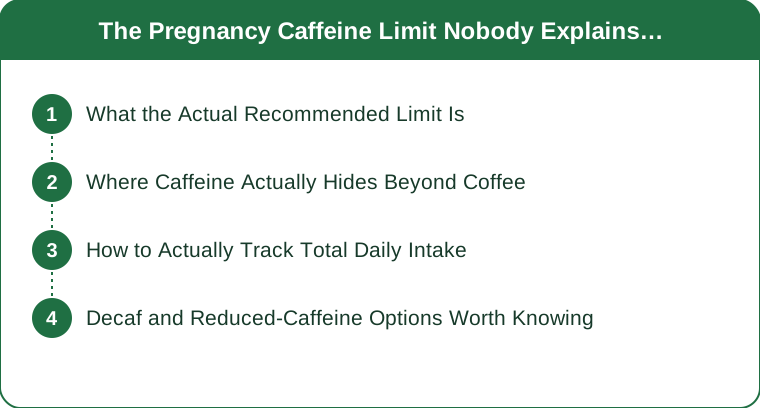
Major health organizations, including ACOG, generally advise staying under about 200 mg of caffeine per day during pregnancy. That’s approximately one 12 oz cup of regular brewed coffee — though “approximately” is carrying a lot of weight, since brewed coffee ranges widely by bean, roast and method.
Three things about that number matter more than the number itself:
It’s a ceiling, not an allowance. 200 mg is an upper limit, not a daily goal. Less is generally considered the more cautious position, and there’s no requirement to consume any caffeine at all.
Your metabolism changes. Caffeine clearance slows substantially as pregnancy progresses — by the third trimester, caffeine can take several times longer to clear than it did pre-pregnancy. The practical effect: the same latte that used to wear off by lunch now stays with you, and often shows up as trouble sleeping at 11pm.
It’s a combined daily total. The limit applies to everything you consume in a day added together, not to coffee evaluated in isolation. This is where most people unknowingly go over.
Where does caffeine hide beyond coffee?
Rough amounts to work with — always check the label when there is one:
| Source | Typical caffeine |
|---|---|
| Brewed coffee, 8 oz | ~95 mg (80–120) |
| Brewed coffee, 16 oz mug | ~190 mg |
| Espresso shot | ~65 mg |
| Black tea, 8 oz | ~40–70 mg |
| Green tea, 8 oz | ~25–45 mg |
| Matcha, 8 oz | ~60–70 mg |
| Cola, 12 oz | ~35–45 mg |
| Energy drink, 8–16 oz | ~80–200+ mg |
| Dark chocolate, 1 oz | ~20–25 mg |
| Milk chocolate, 1 oz | ~6 mg |
| Decaf coffee, 8 oz | ~2–5 mg |
Tea is the most underestimated source. People treat it as effectively caffeine-free, but a strongly brewed black tea is a third of your ceiling — and steep time changes it dramatically. Two minutes and five minutes are meaningfully different drinks.
Dark chocolate counts in more than small amounts. A few squares is negligible; half a bar is not.
Energy drinks can consume the entire limit in one can, and often carry other stimulants and herbal ingredients that aren’t recommended in pregnancy at all. These are the category to simply skip.
Some medications contain caffeine too — certain headache and cold remedies especially. Worth a label check.
How do you track your total accurately?
Three habits, and the first one is where nearly all the error lives.
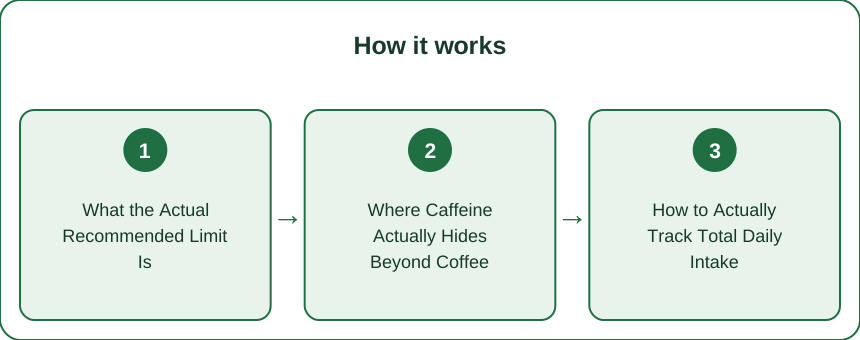
1. Measure your actual mug. Fill it with water and pour it into a measuring cup once. Most “one cup” home mugs hold 12–16 oz, and plenty hold 20. If your morning coffee is a 16 oz mug of regular brew, you’re already at roughly 190 mg — your whole day’s ceiling, before the iced tea at lunch.
2. Read milligram labels rather than trusting the category. Caffeine content varies enormously by brand within the same category, and packaged drinks increasingly print it. Coffee shop chains publish nutrition data online — a large drip coffee at a major chain can run 250–300+ mg on its own, which is well past the limit in a single order.
3. Keep a running daily total, not per-item judgments. Add it up across coffee, tea, soda and chocolate. A note on your phone works fine; so does a rule of thumb like “one 8 oz coffee in the morning, then only decaf and herbal.” Evaluating each drink in isolation is exactly how people end up at 300 mg while believing they’re being careful.
What about decaf and lower-caffeine swaps?
Decaf still has some. Around 2–5 mg per cup — negligible for one, but four cups of decaf plus a strong tea is a real number. Still, decaf is a genuinely good swap and does most of what you want.
Half-caf is the underrated option. Blending regular and decaf grounds cuts a cup roughly in half while keeping the ritual, the flavor and the warm mug — which is often what people actually miss.
Herbal teas are caffeine-free, but that’s a different question from pregnancy-safe. Peppermint, ginger and rooibos are widely considered fine; several other herbs are not routinely recommended in pregnancy. Read ingredients rather than assuming “herbal” means “safe,” and ask your provider about any blend you drink daily.
Other swaps worth knowing: decaf iced coffee behaves like the real thing on a hot day, chicory-based drinks give you the bitter-roasted note with no caffeine, and sparkling water with citrus covers the afternoon-soda habit.
5 Mistakes Everyone Makes With Pregnancy Caffeine
- Assuming “one cup” means their cup. The gap between a 12 oz standard and a 20 oz mug is the whole limit.
- Forgetting tea entirely. Three strong black teas across a day quietly matches a coffee.
- Counting only the morning. The limit is a daily total, and afternoon soda is where it usually breaks.
- Treating a coffee shop “medium” as a standard cup. Chain sizing bears no relationship to the 8 oz used in nutrition tables.
- Quitting cold turkey and getting three days of withdrawal headaches. Tapering by roughly 25% every few days is far kinder, and the third mistake on this list is usually what created the high baseline in the first place.
Mini FAQ
What is the ACOG caffeine limit in pregnancy?
Under 200 mg per day — roughly one 12 oz cup of regular brewed coffee. ACOG describes moderate caffeine consumption below that level as not appearing to be a major contributing factor in miscarriage or preterm birth, while noting the evidence at higher intakes is less settled. Treat it as a ceiling and stay comfortably under it where you can.
Does the caffeine limit change by trimester?
The recommended number stays the same across pregnancy, but your body doesn’t — caffeine clearance slows progressively, so the same intake has a longer-lasting effect later on. Many people naturally cut back in the third trimester simply because the sleep disruption becomes obvious.
Do I have to give up coffee completely?
No. Staying under 200 mg a day means one standard 8–12 oz cup is generally within the guidance. If you’d rather reduce further, half-caf and decaf let you keep the routine while dropping the number — and if coffee has stopped appealing to you altogether in the first trimester, that’s extremely common and nothing to fix.
TL;DR:
- Aim for under 200 mg/day — a ceiling, not a target.
- ~200 mg ≈ one 12 oz cup of regular brewed coffee.
- Count everything: tea, soda, energy drinks, dark chocolate, some medications.
- Measure your actual mug — most hold 12–16 oz, not 8.
- Caffeine clears more slowly as pregnancy progresses.
- Decaf ≈ 2–5 mg/cup; half-caf keeps the ritual; check herbal tea ingredients, not just caffeine.
Run one daily tally instead of one swapped drink, and the number takes care of itself — then confirm the plan with your own provider.
Keep Reading
This article is for general informational purposes only and is not medical advice. Always consult a qualified health professional for guidance specific to you.