Second Trimester Nutrition Questions, Answered One by One
Quick Answer: The second trimester typically brings increased appetite, resolving nausea, and new questions about calorie needs, protein targets, and specific foods — most of which have clearer, less anxious answers than the constant caution around first-trimester eating.
First trimester nutrition advice is dominated by what to avoid during nausea. Second trimester brings a different, often less-discussed set of questions once appetite returns and energy needs shift.
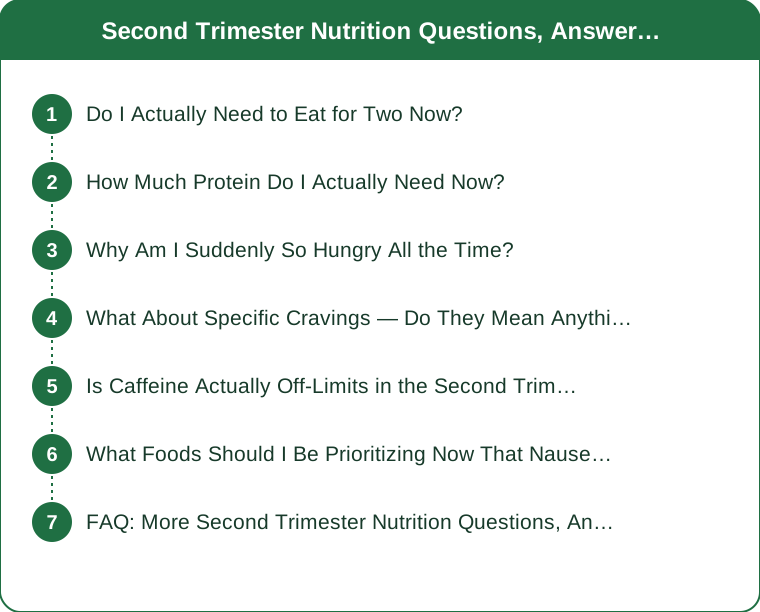
Do I Actually Need to Eat for Two Now?
No — the “eating for two” framing significantly overstates real calorie needs. Most guidelines suggest an additional 300-450 calories per day during the second trimester, not a doubling of intake, which is a much smaller adjustment than the popular phrase implies.
This typically looks like one additional balanced snack per day — a piece of fruit with nut butter, or yogurt with granola — rather than a fundamentally larger version of every meal.
How Much Protein Do I Actually Need Now?
Protein needs increase somewhat during the second trimester to support fetal growth, with many guidelines suggesting roughly 70-100 grams per day depending on body size and activity level, though individual needs vary and are worth discussing with your prenatal provider.
Spreading protein across meals and snacks — rather than concentrating it in one meal — tends to be easier to hit consistently and may support more stable blood sugar and energy throughout the day.
Why Am I Suddenly So Hungry All the Time?
Increased appetite in the second trimester reflects real, increased metabolic and nutritional demand as the fetus grows rapidly during this period — it’s a physiological signal, not a lack of willpower or a sign something’s wrong.
Keeping easy, balanced snacks accessible (rather than restricting in response to the hunger) tends to work better than trying to override the appetite increase, which is serving a genuine purpose during this trimester.

What About Specific Cravings — Do They Mean Anything?
Cravings don’t reliably indicate a specific nutrient deficiency, despite the popular folklore around this — they’re more consistently linked to hormonal changes and shifting taste and smell sensitivity during pregnancy.
That said, working with a craving rather than against it — finding a way to include a reasonable portion of the craved food alongside more balanced options — tends to be more sustainable than strict avoidance.
Is Caffeine Actually Off-Limits in the Second Trimester?
Most guidelines suggest limiting caffeine to around 200mg per day during pregnancy (roughly one 12-ounce cup of coffee), rather than eliminating it entirely — this limit applies throughout pregnancy, not just a specific trimester.
It’s worth remembering that caffeine appears in more places than coffee alone — tea, chocolate, and some sodas all contribute to the daily total, which matters if you’re trying to stay under a specific limit.
What Foods Should I Be Prioritizing Now That Nausea Has Eased?
Iron-rich foods (lean meat, beans, spinach) become more important in the second trimester as blood volume expands significantly, and inadequate iron intake during this period is a common contributor to pregnancy fatigue.
Calcium and vitamin D-rich foods also matter more now as fetal bone development accelerates — dairy, fortified plant milks, and leafy greens are practical sources worth prioritizing as appetite returns.
FAQ: More Second Trimester Nutrition Questions, Answered
Is it safe to lose weight during the second trimester if I overate in the first?
Weight loss generally isn’t recommended during pregnancy regardless of first-trimester patterns — talk to your prenatal provider about your specific situation rather than self-adjusting based on earlier trimester eating.
Do I need a prenatal vitamin if I’m eating well now?
Most providers still recommend continuing a prenatal vitamin even with improved appetite and diet, since it’s difficult to reliably meet all pregnancy-specific nutrient needs through food alone.
Should second trimester food aversions worry me if my diet becomes repetitive?
A temporarily repetitive diet driven by aversions is common and usually not concerning on its own — mention persistent, significant aversions to your provider so they can check for any nutritional gaps worth addressing.
TL;DR:
- Second trimester calorie needs increase modestly (roughly 300-450 calories/day), not by “eating for two”
- Protein needs rise to roughly 70-100g daily depending on individual factors
- Increased hunger reflects real metabolic demand, not a lack of discipline
- Cravings don’t reliably signal specific deficiencies, despite common folklore
- Iron and calcium become more important as blood volume and fetal bone development accelerate
This is general information, not medical advice — bring specific nutrition questions to your prenatal provider, since individual needs vary by body size, activity level, and pregnancy history.
See It in Motion
Seen here: Maternity Capris with Side Pockets — shop it on bubblelime.com
Keep Reading
This article is for general informational purposes only and is not medical advice. Always consult a qualified health professional for guidance specific to you.