Pregnancy Nutrition Questions for the Weeks Everything Goes Back to Routine
Quick Answer: When your schedule tightens, the pregnancy nutrition questions that matter most are about timing and portability rather than about ideal meals. Eating regularly matters more than eating perfectly - long gaps worsen nausea, heartburn, and fatigue. Prioritize protein and iron-containing foods, keep portable snacks in more than one place, and keep taking your prenatal supplement including folic acid and vitamin D as advised. This is general information, not medical advice - your midwife, doctor, or a registered dietitian should guide anything specific to you.
The advice you read in the first trimester assumed you were at home and could eat when you wanted. September has other plans.

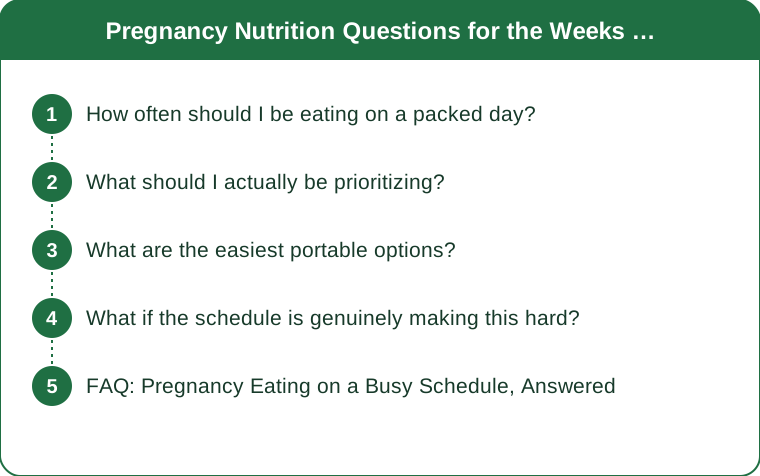
How often should I be eating on a packed day?
Small and frequent generally beats large and spaced during pregnancy. Eating every three to four hours is the pattern most commonly suggested, because it addresses several pregnancy-specific issues simultaneously.
Why does the gap matter so much?
Long gaps tend to worsen nausea, contribute to light-headedness, and make heartburn worse when the eventual meal is large. A smaller meal earlier is nearly always more comfortable than a large one later.
What if I genuinely cannot stop to eat?
This is what pocket food is for. Something you can eat in two minutes between commitments - nuts, a cereal bar, cheese, fruit, a yoghurt drink - covers the gap and prevents the crash. Keeping some in your bag, your desk, and your car means the plan survives a day that goes wrong.
Does timing matter for heartburn specifically?
It does. Eating earlier in the evening, staying upright afterwards, and keeping the evening meal smaller all tend to help, particularly later in pregnancy when there is simply less room.
What should I actually be prioritizing?
What matters most nutritionally?
Protein, iron, calcium, and fibre are the usual practical priorities alongside your prenatal supplement. Protein supports the substantial tissue growth of pregnancy, iron needs rise notably, calcium matters for bone development, and fibre addresses the constipation that is extremely common.
How do I get more iron in without much effort?
Red meat, poultry, fish, pulses, fortified cereals, and dark leafy greens are the usual sources, and pairing plant sources with a vitamin C food - citrus, peppers, tomatoes - improves absorption. Tea and coffee with meals reduce it, so shifting them between meals is a simple change.
Should I still be taking supplements?
Follow the guidance you have been given. Folic acid in early pregnancy and vitamin D throughout are standard recommendations in many countries, and your midwife or doctor will advise on iron based on your blood results rather than on symptoms.
What about protein specifically?
Requirements rise during pregnancy, particularly in the later trimesters. Practically, that means including a protein source at each meal and in most snacks rather than tracking a number.

What are the easiest portable options?
What travels well without a fridge?
Nuts and seeds, oatcakes with nut butter, dried and fresh fruit, cereal bars with reasonable protein, and hard cheese for a few hours. These cover most of a day away from home.
What if I am nauseous and nothing appeals?
Dry, plain, cold, and bland tends to be tolerated best - crackers, plain toast, cold potato, plain yoghurt. Cold food has less smell, which matters a great deal when smell is the trigger. Eating something small regularly is usually better tolerated than waiting until you feel able to eat properly.
Is there anything to avoid packing?
The standard food safety guidance still applies - certain cheeses, undercooked meat and eggs depending on local advice, unpasteurized products, and high-mercury fish. Sandwiches and salads that sit unrefrigerated for hours are worth thinking about too. Check your local guidance, as specific recommendations vary by country.
What about caffeine on a tired day?
Guidance generally sets a daily limit during pregnancy, commonly around 200mg, and it includes tea, chocolate, and some soft drinks alongside coffee. On a tired day the temptation is to exceed it - a snack and a short walk frequently addresses the actual problem better.
What if the schedule is genuinely making this hard?
How do I plan when my days are unpredictable?
Prepare in batches rather than by day. A container of chopped vegetables, some boiled eggs, and portioned snacks on a Sunday covers a week of unpredictable days far better than an ambitious daily plan.
What should I do about the afternoon crash?
Eat before it rather than after. A protein-containing snack mid-afternoon is more effective than caffeine, and pregnancy fatigue is genuinely different from ordinary tiredness - particularly in the first and third trimesters.
Am I entitled to breaks for this at work?
Workplace entitlements for pregnant employees vary by country, but many places have provisions for rest breaks and adjustments. It is worth checking your local rules and speaking to your employer - eating regularly is a legitimate need rather than a preference.
When should I speak to someone rather than manage it myself?
If you cannot keep food or fluids down, are losing weight, feel faint regularly, or have concerns about your iron levels or your diet generally. Severe or persistent vomiting in pregnancy needs medical attention rather than dietary adjustment. This is general information, not medical advice - speak to your midwife, doctor, or a registered dietitian about anything specific to you.
FAQ: Pregnancy Eating on a Busy Schedule, Answered
How often should I eat while pregnant?
Small meals or snacks every three to four hours suits most people, since long gaps tend to worsen nausea, light-headedness, and heartburn. The regularity matters more than the perfection of any individual meal.
What are the best snacks to keep at work?
Nuts and seeds, oatcakes with nut butter, fruit, yoghurt, hard cheese, and reasonable cereal bars. Keep some in more than one place so a disrupted day does not mean going without.
How much caffeine is safe in pregnancy?
Guidance commonly sets a daily limit around 200mg, counting tea, chocolate, and soft drinks as well as coffee. Check your local guidance, as recommendations vary.
What helps with pregnancy fatigue during a working day?
Eating regularly with protein at each meal, keeping iron intake up as advised, staying hydrated, and short walks or daylight breaks. If fatigue is severe or worsening, mention it at your next appointment - it can have addressable causes.
TL;DR:
- Eating every three to four hours matters more than any single meal being ideal - long gaps worsen nausea, heartburn, and fatigue.
- Prioritize protein, iron, calcium, and fibre, and pair plant iron sources with vitamin C foods.
- Keep portable snacks in more than one place so a disrupted day still works.
- Batch-prepare on one day rather than planning each day, and eat before the afternoon crash rather than after.
- Keep taking your prenatal supplement as advised, and follow local food safety and caffeine guidance.
Speak to your midwife, doctor, or a registered dietitian about anything specific to you - this is general information, not medical advice.
See It in Motion
Seen here: Maternity Capris with Side Pockets — shop it on bubblelime.com
Keep Reading
This article is for general informational purposes only and is not medical advice. Always consult a qualified health professional for guidance specific to you.