Pregnancy Nutrition: The Questions That Come Up as the Seasons Change
Quick Answer: Seasonal changes in pregnancy eating are mostly about appetite and practicality, not about different nutritional needs. The things that matter year-round remain the same: adequate protein and iron, folate, appropriate supplementation as advised by your midwife or doctor, and avoiding the specific foods flagged in pregnancy guidance. What changes in autumn is that warm foods are more appealing, vitamin D becomes harder to get from sunlight, and comfort eating patterns shift.
Always follow the guidance from your own midwife or doctor - the answers below are general information, not medical advice, and pregnancy guidance varies by country.
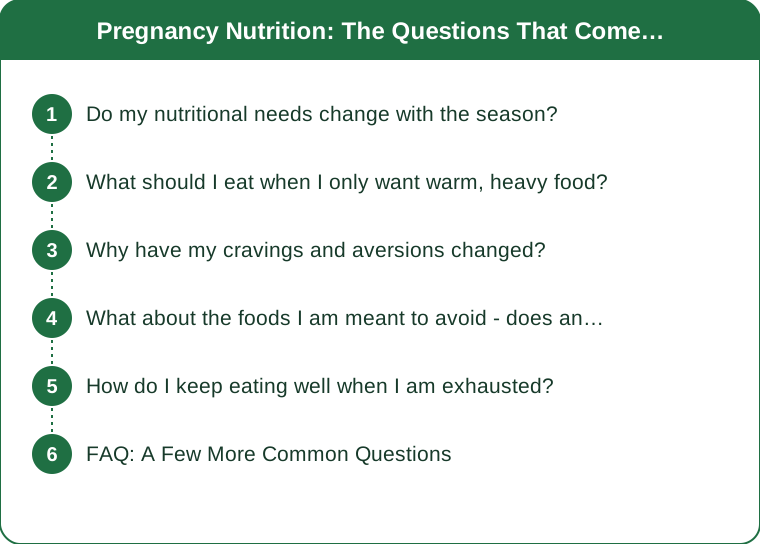
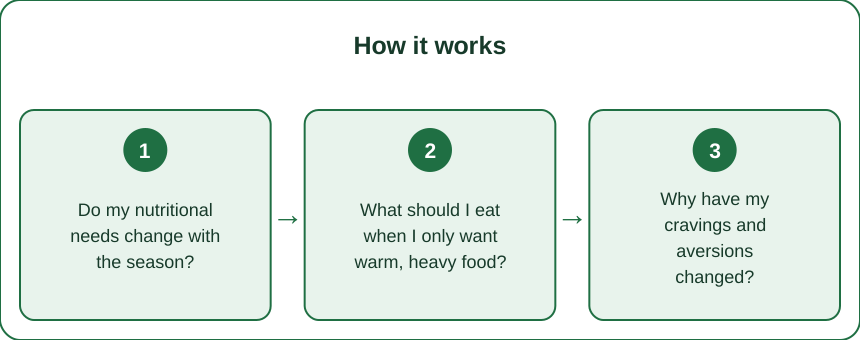
Do my nutritional needs change with the season?
Not fundamentally, with one significant exception.
The exception is vitamin D. Skin production of vitamin D from sunlight drops substantially in autumn and winter at higher latitudes, and many national guidelines recommend a daily vitamin D supplement during pregnancy, sometimes year-round and sometimes specifically through the darker months. Check what your own country’s guidance says and what your midwife recommends, since the specifics vary.
Everything else stays broadly constant. Energy needs do not change because it is cold - the common belief that you need more calories in winter has little practical relevance for someone living and working indoors.
What genuinely changes is behaviour. Appetite tends to shift toward warm, denser foods. Fresh salads and cold meals become less appealing, which can reduce vegetable intake if nothing replaces them. The practical answer is cooked vegetables - soups, stews, roasted trays - which are just as nutritious and considerably more appealing in October.
Hydration often drops too. People drink less water when it is cold, and pregnancy increases fluid requirements. Warm drinks count, and switching to herbal teas and warm water with lemon maintains intake when cold water stops appealing.
What should I eat when I only want warm, heavy food?
Work with the preference rather than against it - almost everything you need can be delivered warm.
Warm foods that cover the important bases:
- Lentil and bean stews - iron, protein, fibre, and folate in one pot
- Soups with added pulses or shredded chicken - vegetables in a form that is actually appealing
- Porridge with nut butter and seeds - a good breakfast option when cold cereal has stopped appealing
- Roasted vegetable trays with a protein - the simplest way to get several vegetables in
- Baked potatoes with beans, cheese, or tuna - genuinely nutritious and very easy
The one thing to watch is that comfort food is often low in protein and vegetables. A bowl of pasta with a tomato sauce is warm and appealing and provides little of either. Adding lentils to the sauce, or a side of something green, closes the gap without changing what you feel like eating.
Iron deserves specific attention, since iron requirements increase in pregnancy and many people fall short. Good sources include red meat, pulses, fortified cereals, and dark leafy greens. Vitamin C alongside plant iron sources improves absorption - a squeeze of lemon on the lentils, or fruit alongside a fortified cereal.
Discuss iron with your midwife, since it is routinely tested during pregnancy and supplementation is sometimes recommended based on your results rather than on diet alone.
Why have my cravings and aversions changed?
Cravings and aversions shift through pregnancy for reasons that are not fully understood, and the seasonal overlay is mostly about availability and appeal.
Aversions often peak in the first trimester and commonly involve strong smells, meat, coffee, and cooking odours. In colder months, when windows stay shut, cooking smells linger, which can make aversions feel worse indoors.
Practical responses: cook with the extractor on, open a window briefly, cook batches when you feel better and freeze them, and eat cold or room-temperature versions of foods whose hot smell is the problem.
Cravings are common and are generally nothing to worry about if your overall diet is reasonable. The exception is craving or eating non-food items - ice, soil, chalk, paper - which is called pica and is worth mentioning to your midwife promptly, since it is sometimes associated with iron deficiency.
On managing cravings practically: most guidance is straightforwardly permissive about enjoying what you want within an overall balanced diet. The more useful question is whether anything important is being displaced - if sweet cravings mean skipping meals, the fix is regular meals with protein rather than resisting the craving.
And nausea does not always end at twelve weeks. For some people it persists much longer, and eating small amounts frequently, keeping something plain by the bed, and prioritising getting any food in at all is entirely reasonable. If you cannot keep fluids down, contact your midwife or doctor promptly.
What about the foods I am meant to avoid - does anything change in autumn?
The list does not change, but a couple of items become more relevant as the season shifts.
The standard pregnancy avoidance guidance covers certain cheeses, undercooked meat and eggs depending on local standards, some fish with higher mercury levels, unpasteurised products, liver and high-dose vitamin A, and limits on caffeine. The specifics vary by country - check your own national guidance and ask your midwife, since recommendations genuinely differ.
Two autumn-specific points worth raising:
Game meat. Autumn is game season in many places, and game shot with lead ammunition can contain lead fragments. Several national bodies advise pregnant women to avoid or limit game meat for this reason. Check your local guidance.
Seasonal buffets and gatherings. As the entertaining season begins, food that has been standing at room temperature for extended periods carries a higher risk. Freshly served hot food is the safer choice at any gathering.
On caffeine: limits are commonly set around 200mg per day, which is roughly two cups of instant coffee, but check your local guidance. This is worth revisiting in autumn because hot drink consumption tends to rise as the weather cools, and it is easy to drift past the limit without noticing.
On alcohol: most national guidance now advises avoiding alcohol entirely during pregnancy. The party season starts earlier than people expect, and having an answer ready makes it easier.
How do I keep eating well when I am exhausted?
By lowering the bar and making the easy option the reasonable one, rather than relying on energy you do not have.
Fatigue in pregnancy is real and substantial, particularly in the first and third trimesters, and it directly affects what gets cooked. Any strategy that requires energy in the evening will fail.
What works:
- Batch cook when you feel well and freeze in portions. A good day buys you four bad ones.
- Keep genuinely easy options in the house - tinned pulses, frozen vegetables, eggs, tinned fish, frozen batch meals, oats. A well-stocked cupboard removes the decision.
- Accept shortcuts. Pre-chopped vegetables, ready-cooked grains, frozen everything. The cost premium buys meals that actually happen.
- Eat regularly rather than perfectly. Skipping meals worsens nausea, fatigue, and blood sugar swings.
Ask for help specifically. “Could you cook on Tuesdays” is actionable; “I’m tired” is not. People generally want to help and do not know what to offer.
And keep something plain and easy by the bed if morning nausea is a factor - dry crackers or oatcakes eaten before getting up help many people, though not all.
If you are struggling to eat, losing weight, unable to keep fluids down, or worried about any aspect of your nutrition, contact your midwife or doctor. This is general information and does not replace individual medical advice.
FAQ: A Few More Common Questions
Do I need to eat more in the third trimester?
Energy needs increase modestly in later pregnancy, but the commonly quoted amount is far smaller than the phrase eating for two implies. Follow your appetite and your midwife’s guidance.
Are herbal teas safe?
Some are and some are not recommended in pregnancy. Check individual ingredients rather than assuming, and ask your midwife about anything you drink regularly.
Should I take a pregnancy multivitamin?
Guidance differs by country. Folic acid and vitamin D are commonly recommended; many general multivitamins contain vitamin A in forms not recommended in pregnancy. Ask your midwife which supplements are appropriate.
Is it normal to gain weight unevenly?
Yes. Weight gain in pregnancy is rarely linear and varies considerably between individuals. Your midwife will monitor as appropriate for your situation.
Can I still exercise if my appetite is low?
Discuss with your midwife. Generally, eating enough to support activity matters, and reducing activity is sometimes the appropriate answer during a period of poor appetite.
TL;DR:
- Nutritional needs do not change seasonally, with the important exception of vitamin D
- Warm foods can cover everything - lentil stews, soups with pulses, roasted trays, porridge
- Watch that comfort food is not displacing protein and vegetables, and add rather than restrict
- Hydration drops in cold weather; warm drinks count toward it
- Batch cook on good days, keep the cupboard stocked, and ask for specific help
Most of what changes about eating in pregnancy as autumn arrives is practical rather than nutritional - what appeals, what is easy, and how much energy you have to cook. Follow the guidance from your own midwife or doctor for anything specific to you; this article is general information only.
See It in Motion
Seen here: Maternity Capris with Side Pockets — shop it on bubblelime.com
Keep Reading
This article is for general informational purposes only and is not medical advice. Always consult a qualified health professional for guidance specific to you.