Pregnancy Nutrition 101: What to Eat for a Healthy Bump
The moment that second line appears, food suddenly gets complicated. Can you eat this? Should you eat more of that? Take a breath — pregnancy nutrition is far simpler than the internet makes it feel. You do not need a perfect diet; you need a good-enough pattern repeated most days. This guide covers the foundations that matter most, minus the panic.

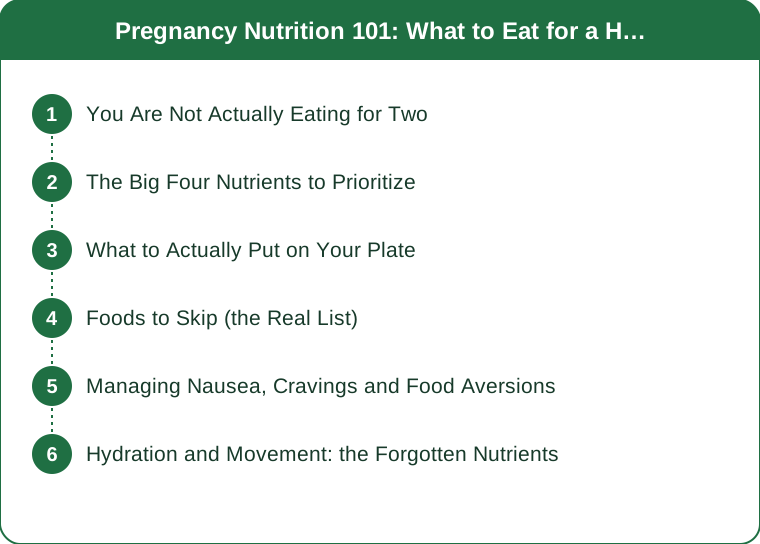
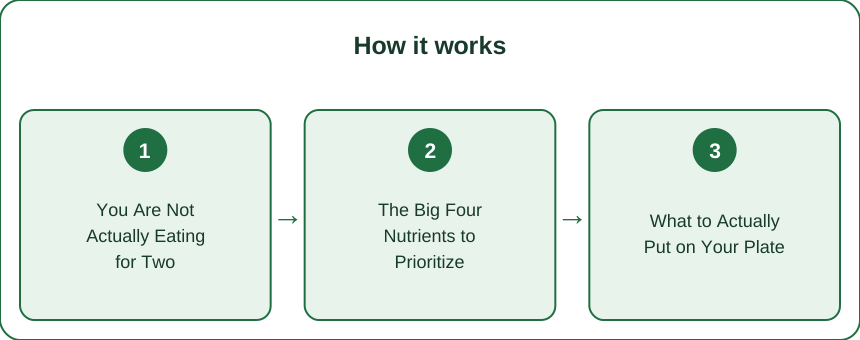
You Are Not Actually Eating for Two
The famous phrase is charming but misleading. In the first trimester you need almost no extra calories at all, and even in the third trimester the increase is roughly a healthy snack — think 300 to 450 extra calories, not a second dinner. What doubles is not quantity but importance: every bite now carries more nutritional responsibility. Focus on making calories count rather than counting more calories.
The Big Four Nutrients to Prioritize
Four nutrients do the heaviest lifting in pregnancy: folate for early neural development, iron for your expanding blood supply, calcium for building tiny bones, and DHA omega-3 for brain growth. A good prenatal vitamin covers your bases, but food comes first — leafy greens and beans for folate, lean red meat and lentils for iron, dairy or fortified alternatives for calcium, and low-mercury fish like salmon twice a week for DHA.
What to Actually Put on Your Plate
Skip the complicated meal plans. Aim for a simple template: half your plate colorful vegetables and fruit, a quarter quality protein, a quarter whole grains, plus a thumb of healthy fat. Snacks that pull double duty — Greek yogurt with berries, hummus with carrots, a handful of walnuts — quietly deliver protein, calcium and omega-3s between meals. In summer heat, water-rich fruits like watermelon and peaches help hydration too.
Foods to Skip (the Real List)
The genuine no-list is shorter than you fear: raw or undercooked meat and eggs, unpasteurized cheese and juice, high-mercury fish like swordfish and king mackerel, and alcohol. Caffeine is a limit, not a ban — most guidelines allow about 200mg a day, roughly one 12-ounce coffee. Everything else you have been side-eyeing, from sushi rice to deli salads, is usually about food-safety handling rather than the food itself.
Managing Nausea, Cravings and Food Aversions
If the smell of chicken suddenly sends you running, you are in good company. Morning sickness responds best to small, frequent, bland meals — crackers before you even get out of bed, cold foods that smell less, ginger tea, and protein at every sitting. Cravings are fine to honor in moderation; just pair them with something nourishing. A craving-plus-protein rule keeps blood sugar steadier and energy smoother.
Hydration and Movement: the Forgotten Nutrients
Water is doing enormous work right now — building amniotic fluid, expanding blood volume, and regulating your temperature. Aim for pale-yellow urine as your simple gauge, and add extra glasses on hot summer days. Gentle movement like walking after meals also helps digestion, blood sugar and swelling. Comfortable, supportive maternity activewear makes that daily walk something you actually look forward to.
Pregnancy nutrition is a practice of mostly, not perfectly. Mostly colorful plates, mostly water, mostly gentle movement — with plenty of grace for the days when only toast sounds edible. Your body knows how to grow this baby; your job is simply to keep the pantry stocked with good raw materials. This article is general information, not medical advice — always confirm specifics with your OB or midwife.
See It in Motion
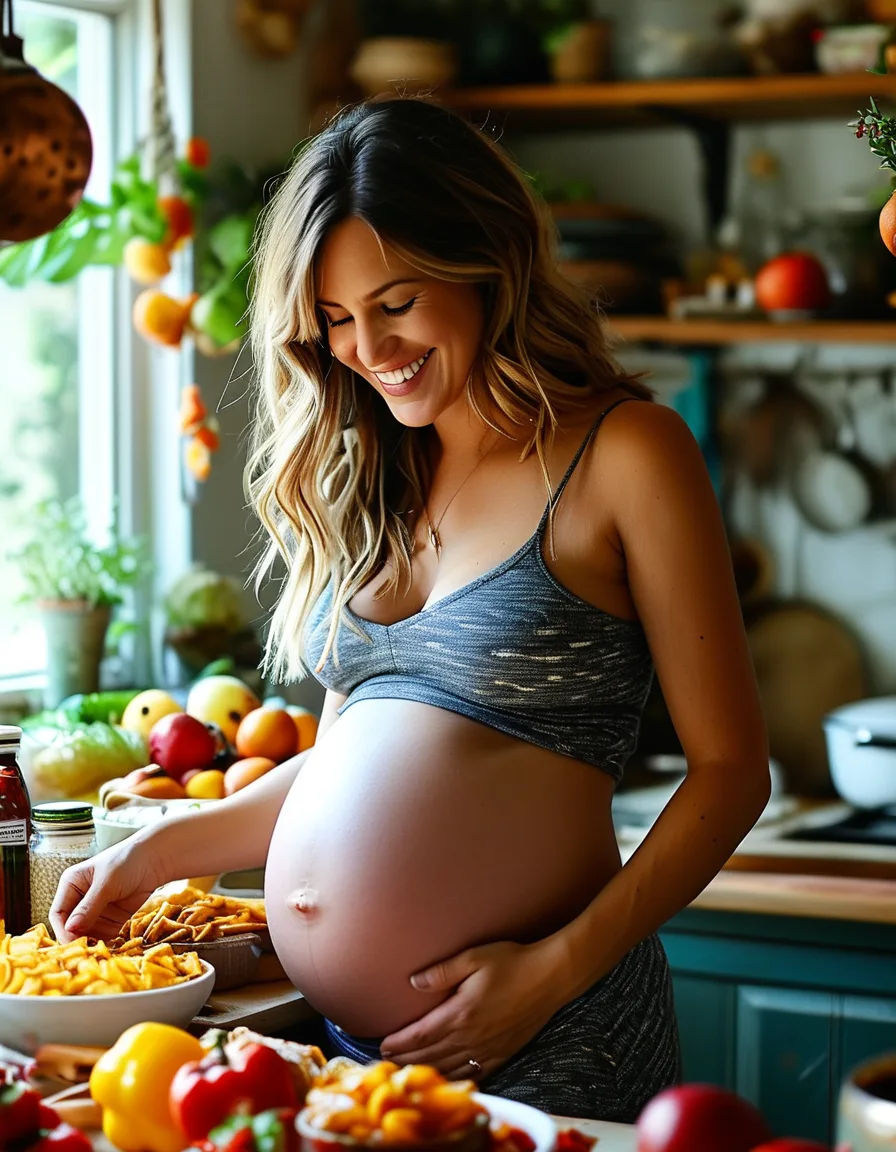
Seen here: Maternity Capris with Side Pockets — shop it on bubblelime.com
Keep Reading
This article is for general informational purposes only and is not medical advice. Always consult a qualified health professional for guidance specific to you.