Pregnant in August: A Realistic Hydration Guide for the Hottest Weeks
Quick Answer: Pregnancy pushes fluid needs to roughly 8 to 12 cups a day - and August heat pushes past that with every sweaty hour. The workable system: anchor a glass to existing daily events rather than chugging to catch up, let urine color be the gauge (pale straw is the target), lean on food-water like melon and cucumbers when nausea fights plain water, and treat dizziness, cramping, or a spike in Braxton-Hicks as the dehydration alarms they often are. Front-load the day, taper the final hour before bed, and call your provider about anything that does not resolve with rest and fluids. This is general information, not medical advice.
Every pregnant woman gets told to drink more water, which is like being told to sleep more with a newborn - correct, unhelpful. What August actually requires is a system that works with the nausea, the bathroom math, and a body already running its cooling system on high.

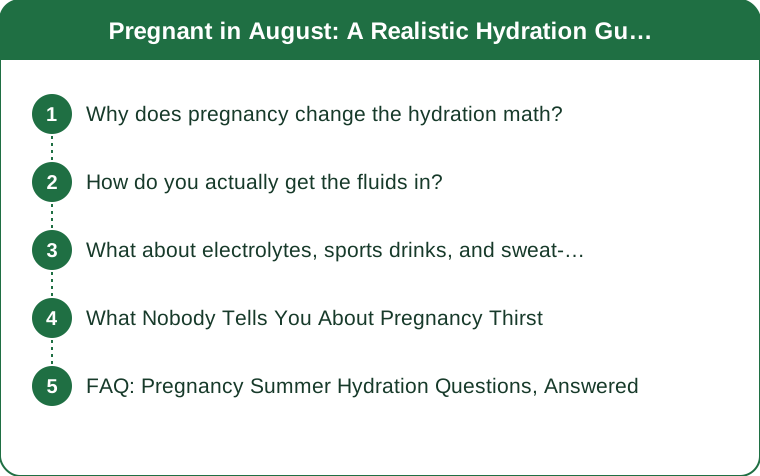
Why does pregnancy change the hydration math?
Because you are hydrating an expansion project. Blood volume increases dramatically across pregnancy - commonly cited around 45 percent above baseline - and blood is mostly water. Amniotic fluid is built and continuously refreshed from your fluid intake. The placenta’s entire delivery business runs on adequate circulation volume. Add the routine costs - digestion that fights constipation, kidneys filtering for a higher workload - and the standard guidance of roughly 8 to 12 cups of fluid daily starts looking less like wellness advice and more like an operating requirement.
Then August adds its line items. Pregnant bodies run warmer and start sweating sooner - the cooling system works harder at every temperature, and sweat is a fluid expense. Overheating itself is worth avoiding in pregnancy, which makes sweating both necessary and costly.
And the paradox worth internalizing: hydration reduces the puffiness everyone blames on water. Late-summer ankle and finger swelling tempts people to drink less; physiologically, adequate fluid supports the circulation and kidney function that keep normal pregnancy swelling in its normal lane, while restriction makes the body cling harder to what it has. The swollen-ankles response is more water, feet up, and cooler hours - not less water. Sudden or severe swelling, especially of the face and hands with a headache, is a different animal entirely: that is a call-your-provider-today symptom, not a hydration project.
How do you actually get the fluids in?
Anchor, do not chug. A glass tied to existing events - on waking, with each meal and snack, at every nursing-pillow-adjacent sit-down, one mid-morning and one mid-afternoon - arrives at the target without the sloshing misery of catch-up chugging, which in pregnancy also invites reflux. A marked large bottle turns the day’s progress into a glance.
Front-load against the bladder math. The third-trimester bladder runs on a short clock, and every evening cup buys a 3am trip. Weight the intake toward morning and afternoon, then taper to sips in the last hour before bed - hydration by 8pm is what lets 2am stay merely once-interrupted.
Check the gauge, not the tally. Urine the color of pale straw means the system is winning; deep yellow means you are behind, and behind in August compounds by mid-afternoon. Prenatal vitamins can neon-brighten things for a couple of hours after taking them - read the trend across the day, not the single data point.
When nausea vetoes plain water, change the format, not the goal. Cold beats room temperature for most queasy stomachs; fizzy water with a squeeze of citrus gets sipped when flat water triggers; diluted juice, milk, decaf iced tea, and broth all count fully toward the total. And food-water is real water: watermelon, cucumbers, oranges, tomatoes, yogurt, soup - August’s produce aisle is a hydration strategy with a price floor. A melon-heavy fruit plate on a hot afternoon is doing legitimate work.

What about electrolytes, sports drinks, and sweat-heavy days?
Plain water covers ordinary days. A normal day of errands, work, and moderate walking needs water plus regular food - meals supply the sodium and potassium that headlines try to sell back to you in powder form.
Genuine sweat sessions change the math. A long walk in real heat, prenatal exercise outdoors, a beach day, an un-air-conditioned afternoon - when sweat is visibly doing its job for an hour or more, replacing only water can leave electrolytes diluted and you feeling flat, headachy, or crampy despite the full bottle. That is the legitimate slot for an electrolyte drink: a half-strength sports drink, an electrolyte tablet in water, or the lower-sugar pregnancy-marketed mixes. Watching the sugar load matters - full-strength sports drinks are dessert-sweet, and half-dilution usually serves the purpose - and anyone with gestational diabetes or blood-pressure guidance should route drink choices through their provider.
Sodium is not the villain of a normal pregnancy - normally salted food supports the fluid expansion project - though again, provider guidance overrides internet reassurance for anyone with specific conditions.
Caffeine accounting stays simple: the standard advice caps around 200mg daily, and a morning iced coffee within that limit still contributes its fluid. It is not stealing more hydration than it brings.
And the best electrolyte strategy in August is scheduling: outdoor time before 10am or after 6pm, shade as the default, and the midday hours conceded to air conditioning. Fluid you do not sweat out is fluid you do not have to replace.
What Nobody Tells You About Pregnancy Thirst
Braxton-Hicks are a dehydration gauge. Practice contractions reliably increase when fluids run low - it is one of the most repeated observations in late pregnancy, and a sudden crampy, tightening-heavy afternoon often resolves with a large glass of water, a cooler room, and lying on your left side within an hour. If contractions organize into a pattern, intensify, or keep coming despite fluids and rest - or you are before 37 weeks - that stops being a hydration note and becomes a call to your provider now.
Dizziness on standing is usually a fluid-and-heat message. The expanded circulation is gravity-sensitive; hot afternoons plus a low tank produce the head-rush. Slower position changes, fluids, and cool air are the response - recurring or fainting-level dizziness is provider territory.
Night thirst versus night bladder is a rigged fight. The taper-and-front-load system is the peace treaty: hydrated by evening, sips only at the bedside, and the 2am wake-up stays singular.
Thirst lags in pregnancy heat. By the time August thirst announces itself, you are already behind - which is the entire argument for anchored drinking on schedule rather than on signal.
And the headache-fatigue-crankiness triad at 4pm is water-shaped more often than anyone credits. Before auditing sleep, snacks, or feelings, drink a full glass and sit in the cool for fifteen minutes. It is the cheapest differential diagnosis in pregnancy - and it keeps the real alarms, the ones that do not resolve, easier to spot against a hydrated baseline.
FAQ: Pregnancy Summer Hydration Questions, Answered
How much water should a pregnant woman drink in hot weather?
Start from the standard 8 to 12 cups of total fluids daily and add for sweat - hot days with outdoor time can push needs meaningfully higher. Pale-straw urine is a better compliance gauge than any fixed number. Your provider’s advice overrides general figures, especially with any complications.
Are electrolyte drinks safe during pregnancy?
Generally yes in moderation for sweat-heavy days - half-strength sports drinks or electrolyte tablets cover the need with less sugar. Anyone with gestational diabetes or blood-pressure conditions should confirm choices with their provider. This is general information, not medical advice.
Can dehydration cause contractions?
Low fluids commonly increase Braxton-Hicks practice contractions, and rehydration plus rest usually settles them within an hour. Contractions that organize, intensify, persist despite fluids, or arrive before 37 weeks warrant calling your provider promptly.
What are the signs of dehydration in pregnancy?
Dark urine, headache, dizziness on standing, dry mouth, fatigue, and a Braxton-Hicks uptick are the early set. Severe signs - very little urination, rapid heartbeat, confusion, inability to keep fluids down - mean contact your provider or seek care the same day.
TL;DR:
- Pregnancy raises fluid needs to roughly 8 to 12 cups daily; August sweat raises it further - and hydration reduces normal swelling rather than causing it.
- Anchor glasses to daily events, front-load before evening, and read urine color instead of counting heroically.
- Nausea days run on cold, fizzy, diluted, and food-water formats; sweat-heavy days earn a half-strength electrolyte drink.
- Braxton-Hicks spikes, dizziness, and the 4pm headache are often fluid messages - and anything that does not resolve with water and rest goes to your provider.
The August version of drink-more-water is a schedule, a gauge, and a produce drawer full of melon. Run the system instead of the willpower, concede midday to the air conditioning, and let pale-straw urine tell you the project is on track.
See It in Motion
Seen here: Maternity Capris with Side Pockets — shop it on bubblelime.com
Keep Reading
This article is for general informational purposes only and is not medical advice. Always consult a qualified health professional for guidance specific to you.