First Trimester Nutrition: The Questions Nobody Answers Properly
Quick Answer: In the first trimester you do not need extra calories, and eating a limited diet because of nausea is normal and usually fine short-term. Prioritise a prenatal vitamin with folic acid, eat whatever stays down in small frequent amounts, and stay hydrated. If you cannot keep fluids down for 24 hours or are losing weight, contact your midwife or doctor - that needs treating, not enduring.
The first twelve weeks are the ones where nutrition advice is least useful and most abundant. You are told to eat a varied, balanced diet at exactly the point where the smell of onions is unbearable and the only thing you want is plain toast. The gap between the advice and the reality produces a lot of unnecessary guilt.
This article is general information, not medical advice. Follow the guidance of your midwife, doctor, or dietitian, which will be specific to you.

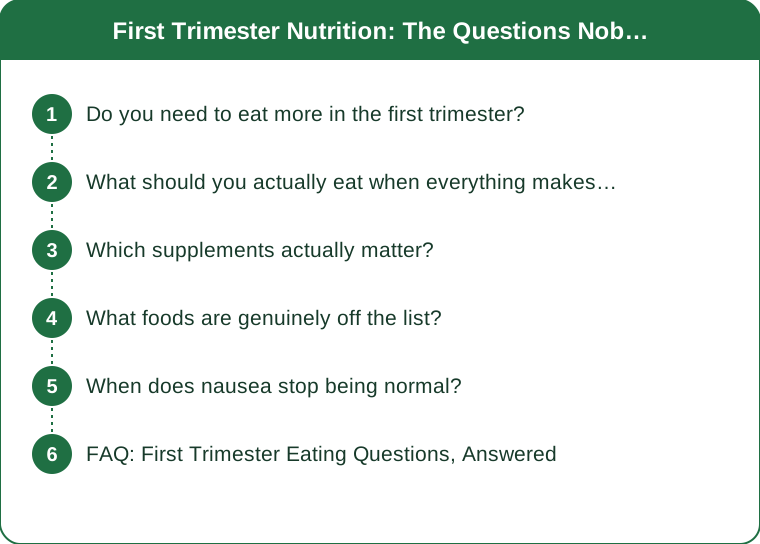
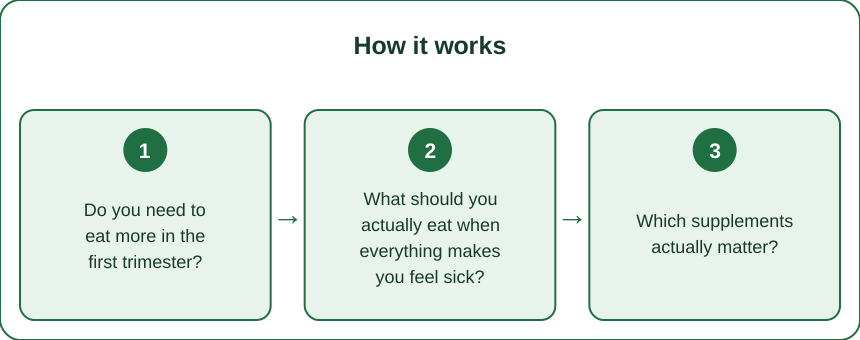
Do you need to eat more in the first trimester?
No. Guidance in the UK and most other countries is that no additional calories are needed in the first trimester, with a modest increase - commonly around 200 extra calories a day - only in the third trimester.
This surprises people, partly because eating for two is such a persistent phrase and partly because early pregnancy hunger can be genuinely intense.
Why am I so hungry then?
Early pregnancy involves large hormonal shifts, and blood sugar tends to be less stable. Many people find they get hungry faster and feel worse when they leave it too long between meals. That is real, and eating more frequently is a reasonable response even without needing more total calories.
Should I be tracking what I eat?
Generally no, and for many people it is actively unhelpful in early pregnancy. Appetite fluctuates enormously, aversions come and go, and rigid tracking tends to add anxiety without improving outcomes. If you have a specific medical reason to monitor intake, your care team will tell you.
What if I am gaining weight already?
Early weight change varies widely and includes fluid shifts. Weight gain patterns are something your midwife will monitor in context - it is not a number to manage on your own.
What should you actually eat when everything makes you feel sick?
The honest answer is: whatever stays down, in small amounts, often. Nausea affects a large majority of pregnancies in the first trimester, and the strategy that works is accommodation rather than optimisation.
What helps with the nausea itself?
- Eat before you get up. Plain crackers or dry cereal by the bed, eaten before sitting up, help a lot of people. An empty stomach makes nausea worse.
- Small and frequent. Something every two hours rather than three meals.
- Cold over hot. Cold food has less smell, and smell is often the trigger.
- Ginger has reasonable evidence for reducing nausea in pregnancy - as tea, biscuits, or capsules.
- Separate fluids from food by 30 minutes or so, as a full stomach of liquid plus food often triggers vomiting.
- Sour and salty often work when nothing else does. Lemon, salty crackers, crisps.
Is it bad if I am only eating carbohydrates?
In the short term, no. The first trimester is a period to get through, and a limited diet for a few weeks is not the same as a limited diet for a pregnancy. Keep taking your prenatal vitamin, keep fluids up, and add variety back as the nausea eases - which it does for most people by around weeks 12 to 16.
Which supplements actually matter?
This is the area where the first trimester genuinely does have specific requirements, and where getting it right matters most.
Folic acid
400 micrograms daily, ideally from before conception until at least 12 weeks. It substantially reduces the risk of neural tube defects. Some people need a considerably higher dose - including those with diabetes, a raised BMI, epilepsy medication, or a previous affected pregnancy. That is a conversation with your doctor, not a decision to make from an article.
Vitamin D
10 micrograms (400 IU) daily is recommended throughout pregnancy in the UK, and often year-round for adults generally.
What about iron?
Not routinely supplemented unless you are found to be anaemic on a blood test. Iron supplements can worsen nausea and constipation, so they are given when indicated rather than by default.
What should I avoid in supplements?
Vitamin A in retinol form - high doses are associated with birth defects, which is why liver and liver products, and standard multivitamins containing retinol, are avoided. Use a supplement specifically formulated for pregnancy.
Herbal supplements are largely untested in pregnancy - check anything with your midwife or pharmacist rather than assuming natural means safe.

What foods are genuinely off the list?
The list is shorter than the internet suggests, and the reasons matter more than the rules.
The main ones
- Unpasteurised milk and soft cheeses with white rinds (brie, camembert) and soft blue cheeses - listeria risk. Hard cheeses and pasteurised soft cheeses are fine.
- Raw or undercooked eggs, unless they carry a recognised safety mark such as the British Lion stamp, which indicates they are safe to eat raw or lightly cooked.
- Raw or undercooked meat, and cured meats unless frozen first or cooked - toxoplasmosis risk.
- Liver and liver products - vitamin A.
- High-mercury fish - shark, swordfish, marlin. Tuna is limited rather than banned.
- Alcohol - no known safe level, so the guidance is none.
What about caffeine?
200mg per day is the commonly recommended limit - roughly two mugs of instant coffee, or one strong filter coffee. Remember tea, cola, chocolate, and energy drinks contribute.
Do I have to avoid all fish?
No - the guidance is to eat fish, including 1 to 2 portions of oily fish per week, for omega-3s. It is specific high-mercury species that are excluded, not fish generally.
What about peanuts?
Current guidance says you can eat peanuts in pregnancy unless you are allergic to them. Older advice to avoid them has been withdrawn.
When does nausea stop being normal?
This is the section that matters most, and the one that gets least attention in general nutrition articles.
Ordinary pregnancy nausea and vomiting is unpleasant, common, and self-limiting. Hyperemesis gravidarum is a different condition - severe, persistent vomiting that leads to dehydration, weight loss, and an inability to keep food or fluids down. It affects a small percentage of pregnancies and it needs medical treatment. It is not something to endure, and effective anti-sickness medications exist and are used in pregnancy.
Contact your midwife or doctor urgently if you:
- Cannot keep any fluids down for 24 hours
- Are vomiting several times a day and losing weight
- Have dark, strong-smelling urine or are passing very little
- Feel dizzy, faint, or have a rapid heartbeat
- Have severe abdominal pain, or vomiting alongside a high temperature
Do not wait for a scheduled appointment for any of those. Dehydration in pregnancy escalates quickly and is straightforward to treat once you are seen.
And if the nausea is manageable but making you miserable, that is still worth mentioning. There are treatment options between suffering silently and being hospitalised, and a lot of people do not know that.
FAQ: First Trimester Eating Questions, Answered
Do I need to eat for two in the first trimester?
No. No extra calories are recommended in the first trimester, with a small increase only in the third. Eat to appetite.
Is it OK if I am only eating plain carbs because of nausea?
For a few weeks, yes. Keep taking your prenatal vitamin and stay hydrated. Variety usually returns as nausea eases around weeks 12 to 16.
How much caffeine is safe in pregnancy?
200mg a day is the commonly recommended limit - about two mugs of instant coffee. Include tea, cola, and chocolate in the total.
When should I call my midwife about vomiting?
If you cannot keep fluids down for 24 hours, are losing weight, or have signs of dehydration. That needs treatment rather than waiting it out.
TL;DR:
- No extra calories are needed in the first trimester - eat to appetite, in small frequent amounts.
- A limited diet during weeks of nausea is normal and usually fine; the prenatal vitamin covers the gaps.
- Folic acid 400mcg and vitamin D 10mcg are the two that genuinely matter; avoid retinol-form vitamin A.
- Cannot keep fluids down for 24 hours, losing weight, or feeling faint means call your midwife today.
The first twelve weeks are about getting through them, not about optimising them. The perfect balanced plate can wait until food stops being the enemy. This is general information, not medical advice - your midwife or doctor knows your situation.
See It in Motion
Seen here: Maternity Capris with Side Pockets — shop it on bubblelime.com
Keep Reading
This article is for general informational purposes only and is not medical advice. Always consult a qualified health professional for guidance specific to you.