Third Trimester Nutrition: The Questions People Actually Ask
Quick Answer: In the third trimester, energy needs rise by roughly 450 extra calories a day over pre-pregnancy, while the physical space for food shrinks - which makes smaller, more frequent, nutrient-dense meals the practical approach. Protein needs increase, iron demand peaks, and heartburn becomes the main limiter on what people can comfortably eat. Always follow your own care provider’s guidance over general information.
Most pregnancy nutrition advice is written for the first trimester, when the questions are about nausea and what is safe. The third trimester questions are different and more practical, and they get much less coverage.

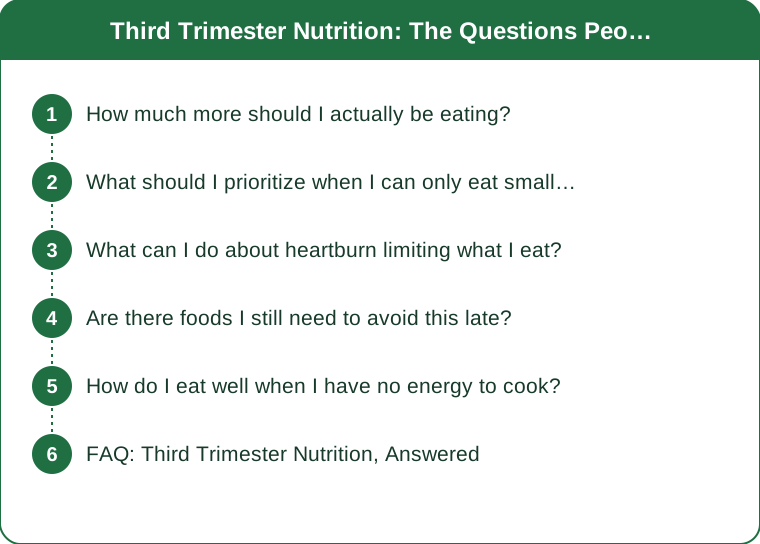
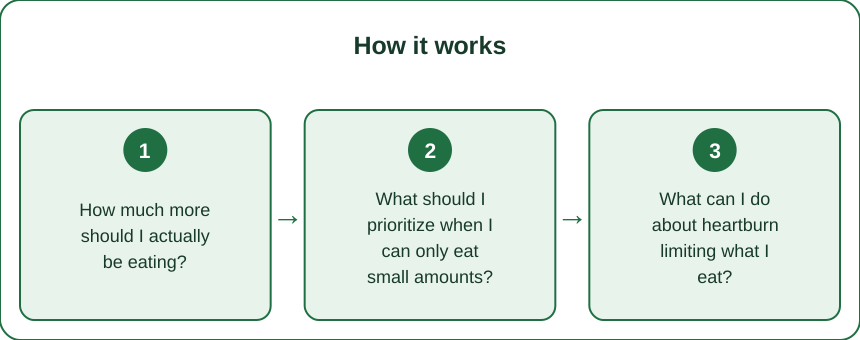
How much more should I actually be eating?
Less than the phrase eating for two implies, and more than the first trimester.
Commonly cited figures are roughly no additional calories in the first trimester, about 340 extra per day in the second, and about 450 extra per day in the third. Those are averages across populations and your provider may give you different numbers based on your starting point, whether you are carrying multiples, and how your weight gain is tracking.
What 450 calories looks like in practice is modest: a Greek yogurt with fruit and nuts, or a peanut butter sandwich and a glass of milk. It is one substantial snack, not an extra meal.
The complication is that the third trimester is when the physical room for food is smallest. The uterus is pressing on the stomach, capacity per meal drops, and eating a normal-sized dinner becomes genuinely uncomfortable.
Which means the practical approach is not larger meals but more of them - typically five or six smaller eating occasions rather than three, each with some protein and some fat so they actually hold.
What should I prioritize when I can only eat small amounts?
Nutrient density, in a specific order.
Protein. Needs rise through pregnancy and the third trimester is when fetal growth is fastest. Prioritize a protein source at every eating occasion - eggs, dairy, legumes, fish that is low in mercury, poultry, tofu. This is the single most useful organizing principle when appetite is limited.
Iron. Blood volume expands substantially and iron demand peaks in the third trimester. Iron deficiency anemia is common in late pregnancy and is one of the things routinely screened for. Dietary sources include red meat, legumes, fortified cereals, and dark leafy greens - and pairing plant iron with vitamin C meaningfully improves absorption, while tea and coffee with a meal reduce it.
Calcium and vitamin D. Fetal skeletal development draws heavily on calcium in the third trimester, and if intake is low it comes from maternal stores.
Omega-3s, particularly DHA. Important for fetal brain and eye development, with the fastest accumulation late in pregnancy. Low-mercury fish two to three times a week is the standard recommendation.
Fiber and fluid. Constipation is extremely common late in pregnancy, and both are the first-line answer.
And keep taking your prenatal vitamin - it is designed to cover the gaps that a limited appetite creates.
What can I do about heartburn limiting what I eat?
Heartburn affects a large majority of people in late pregnancy, driven by hormonal relaxation of the valve at the top of the stomach plus physical pressure from the growing uterus. It is the number one reason third-trimester eating gets difficult.
What helps, in rough order of effectiveness:
Smaller, more frequent meals. A full stomach is the main trigger. This is the same change that solves the capacity problem, which makes it doubly worth doing.
Stop eating 2-3 hours before lying down. Gravity does a lot of work here.
Sleep propped up. Elevating the head of the bed or using a wedge pillow helps considerably.
Identify your specific triggers. Common ones are tomato, citrus, spicy food, chocolate, caffeine, fried food, and mint - but they vary a great deal between people, and eliminating everything on a general list unnecessarily narrows an already limited diet.
Drink between meals rather than with them, so the stomach is less full at once.
If these are not enough, ask your provider - there are antacids and medications considered appropriate in pregnancy, and this is a routine conversation rather than a difficult one. Do not self-prescribe; some antacids interfere with iron absorption, which matters a great deal in the third trimester.
Are there foods I still need to avoid this late?
The standard avoid list applies throughout pregnancy and does not relax in the third trimester.
High-mercury fish - shark, swordfish, king mackerel, tilefish, and bigeye tuna. Low-mercury fish is encouraged, not avoided.
Unpasteurized dairy and juice, and soft cheeses made from unpasteurized milk.
Raw or undercooked meat, poultry, eggs, and shellfish.
Deli meats and refrigerated smoked seafood unless heated until steaming, because of listeria risk.
Alcohol. No amount is established as safe at any stage.
Caffeine, limited to around 200mg a day by most guidelines - roughly one 12oz coffee. Remember tea, cola, and chocolate contribute.
Guidance does differ between countries on some items, and your provider’s advice reflects local recommendations and your individual situation. If you are unsure about a specific food, asking is faster and more reliable than searching.
This is general information, not medical advice. Nutrition in pregnancy should be guided by your own doctor or midwife, who knows your history, your labs, and your individual needs.
How do I eat well when I have no energy to cook?
The last twelve weeks are physically demanding and cooking capacity drops right as nutrient needs peak. Plan for that rather than fighting it.
Batch cook and freeze in single portions while you still have the energy. This is the highest-value use of a good week in the early third trimester, and it pays off directly in the postpartum period too.
Build a no-cook list. Greek yogurt, cottage cheese, hard-boiled eggs, cheese, nuts, hummus, canned fish, pre-cut fruit and vegetables, whole grain bread. Six or seven of these on hand means every eating occasion has an answer that requires no decision.
Keep protein visible and accessible. The snack that gets eaten is the one at eye level in the fridge.
Accept convenience where it helps. Pre-washed greens, frozen vegetables, rotisserie chicken, and pre-cut fruit all cost more and remove a barrier at exactly the point where the barrier is what stands between you and a decent meal.
Let other people cook. If people ask what would help, freezer meals are a genuinely excellent answer and one most people are glad to be given.
FAQ: Third Trimester Nutrition, Answered
Is it normal for my appetite to drop in the last few weeks?
Yes. Reduced stomach capacity from the growing uterus makes large meals uncomfortable, and many people eat less per meal late in pregnancy. Smaller and more frequent is the usual answer - but mention any significant drop in intake to your provider.
Do I need more water in the third trimester?
Fluid needs are higher throughout pregnancy, and dehydration can contribute to constipation, fatigue, and Braxton Hicks contractions. Your provider can give you a target; consistent pale urine through the day is a reasonable everyday check.
Should I be taking iron supplements?
Only if your provider recommends it, based on your bloodwork. Iron is routinely tested in pregnancy, supplemental iron has real side effects including constipation, and taking it unnecessarily is not benign.
Can I keep exercising and eating the same way?
Usually yes, with adjustments, and your provider is the right person to confirm for your situation. If you are exercising, your energy and fluid needs are higher than the general figures above.
TL;DR:
- Energy needs rise by roughly 450 calories a day in the third trimester - about one substantial snack.
- Stomach capacity shrinks, so five or six smaller meals work better than three larger ones.
- Prioritize protein at every eating occasion, plus iron, calcium, and low-mercury fish for DHA.
- Heartburn is the main limiter - smaller meals, no eating 2-3 hours before lying down, and sleeping propped up.
- Batch cook and stock a no-cook list while you have the energy, and follow your provider’s guidance over any general article.
The last twelve weeks are when eating well gets physically harder and matters most. Make it easier in advance - portioned freezer meals, an accessible protein shelf - and the days when cooking is out of the question still have a good answer.
See It in Motion
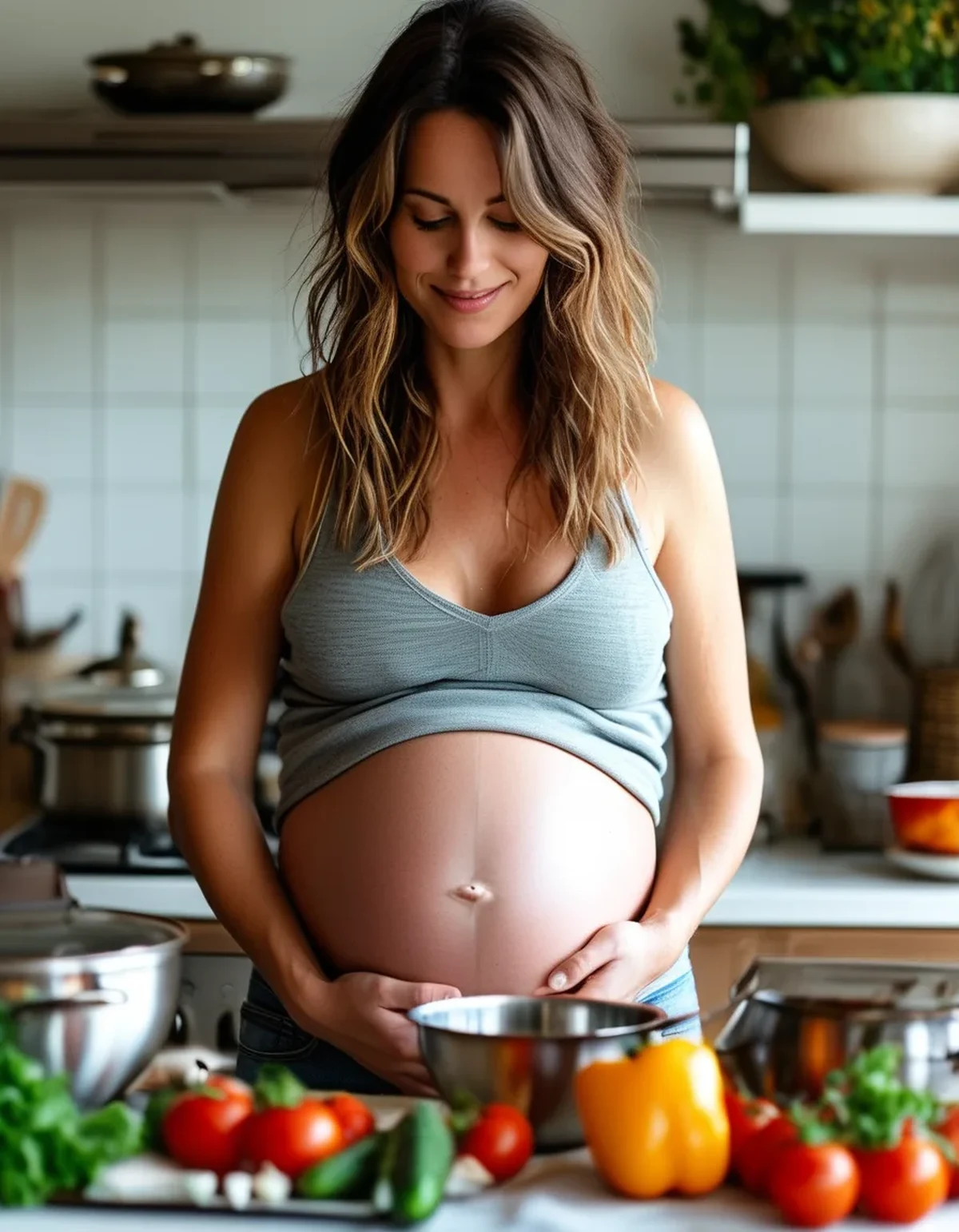
Seen here: Maternity Capris with Side Pockets — shop it on bubblelime.com
Keep Reading
This article is for general informational purposes only and is not medical advice. Always consult a qualified health professional for guidance specific to you.