Best Snacks for Second Trimester Energy Crashes (and Why They Hit So Hard)
Quick Answer: Second trimester energy crashes usually happen because blood volume has increased roughly 40-50% while iron and blood sugar regulation haven’t fully caught up. Snacks combining protein, fiber, and a small amount of complex carbs - like Greek yogurt with berries or hummus with whole grain crackers - stabilize energy better than sugar or caffeine alone.
Everyone talks about first trimester exhaustion, but the second trimester slump sneaks up differently - a 3pm wall that hits even after a decent night’s sleep. Here’s what’s actually driving it and which snacks genuinely help.

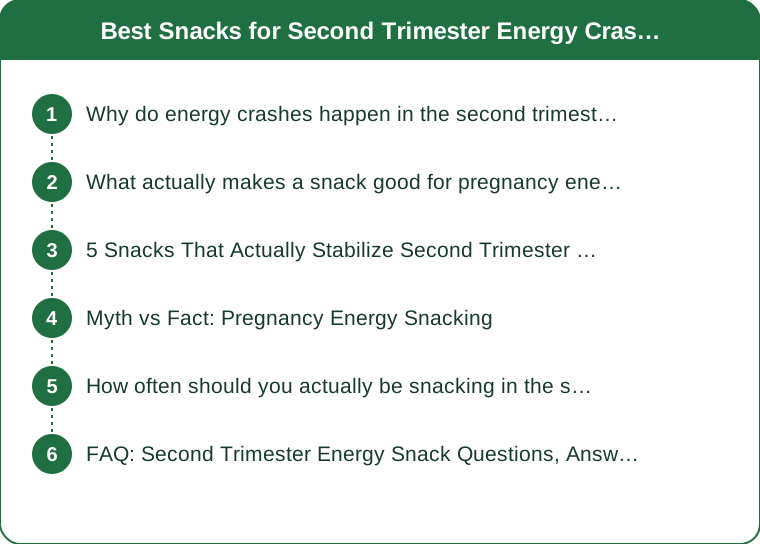
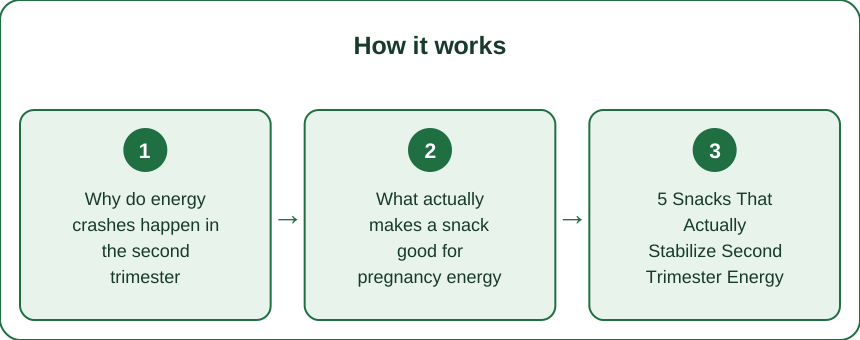
Why do energy crashes happen in the second trimester specifically?
By the second trimester, blood volume has increased by roughly 40-50% to support the growing placenta and baby, which puts real demand on your iron stores and overall circulation. If iron intake hasn’t kept pace with this increase, mild fatigue and afternoon crashes are a common result even without full-blown anemia.
Blood sugar regulation also shifts during pregnancy due to hormonal changes, which can make energy dips feel sharper and faster than they did before pregnancy - a skipped snack or a carb-only lunch can trigger a noticeably harder crash than it would have pre-pregnancy.
This is different from first trimester fatigue, which is largely driven by a surge in progesterone. Second trimester energy dips tend to be more tied to nutrient demand and blood sugar swings, which is exactly why snack choice makes a bigger difference here than it did earlier on.
What actually makes a snack good for pregnancy energy crashes?
The most effective combination is protein plus fiber plus a modest amount of complex carbohydrate - this trio slows digestion and blunts the blood sugar spike-and-crash pattern that a sugary or carb-only snack tends to trigger. A snack with only fast sugar (juice, candy, plain crackers) often makes the crash worse about 45-60 minutes later.
Aiming for roughly 10-15 grams of protein and 3-5 grams of fiber per snack is a reasonable target that fits into a small, realistic portion rather than a full meal. This doesn’t need to be precisely measured - it’s a general shape to aim for, not a strict rule.
5 Snacks That Actually Stabilize Second Trimester Energy
1. Greek yogurt with berries and a spoon of nut butter. Roughly 15-18 grams of protein plus fiber from the berries - one of the most complete single-snack combinations for sustained energy.
2. Hummus with whole grain crackers or cucumber slices. The chickpea base delivers protein and fiber together, and it travels well for work or errands.
3. A hard-boiled egg with a piece of fruit. Roughly 6 grams of protein from the egg, paired with fiber and natural sugar from the fruit for a gentler energy curve than fruit alone.
4. Cottage cheese with sliced peaches or pineapple. A high-protein option (around 12-14 grams per half cup) that many people find easier to eat than yogurt when nausea is still lingering into the second trimester.
5. A small handful of nuts with a piece of cheese. Compact and no-prep, useful for a nightstand or desk drawer stash for the moments you genuinely can’t step away to prepare something.
This is general information, not medical advice - talk to your provider about any specific dietary needs or restrictions during pregnancy.

Myth vs Fact: Pregnancy Energy Snacking
Myth: Reaching for sugar or caffeine is the fastest fix for a pregnancy energy crash. Fact: Sugar and caffeine both create a sharper crash afterward - protein-and-fiber combinations produce a slower, more sustained energy curve even though the initial lift feels less dramatic.
Myth: Skipping snacks between meals helps control pregnancy weight gain. Fact: Going too long between meals often worsens blood sugar swings and can make the next meal’s crash more severe - regular small snacks are a recognized part of steady pregnancy nutrition, not an indulgence.
Myth: If you’re tired in the second trimester, it always means you need more iron supplements. Fact: Fatigue has multiple possible causes in pregnancy - iron matters, but so do hydration, blood sugar stability, and sleep quality. A blood test from your provider, not guesswork, is the right way to confirm an iron deficiency before supplementing beyond your prenatal vitamin.
How often should you actually be snacking in the second trimester?
Many providers suggest eating something every 3-4 hours during the day, rather than relying on three larger meals with long gaps between them. This keeps blood sugar more stable and tends to prevent the sharpest version of the afternoon crash before it starts, rather than trying to recover from it after the fact.
Keeping a stash of 2-3 grab-and-go options (nuts, a granola-and-yogurt combo, cut vegetables with hummus) at your desk or in your bag removes the moment-of-decision friction that often leads to skipping a snack entirely when you’re busy.
FAQ: Second Trimester Energy Snack Questions, Answered
Is it normal to feel hungrier in the second trimester than earlier in pregnancy?
Yes, increased appetite is common as morning sickness eases and your body’s caloric and nutrient needs rise to support growth - this is a normal, expected shift, not a lack of self-control.
Can energy crashes in the second trimester be a sign of gestational diabetes?
Occasional afternoon dips are usually normal blood sugar variation, but if crashes are frequent, severe, or paired with excessive thirst, mention it to your provider, since gestational diabetes screening typically happens around 24-28 weeks regardless. This is general information, not medical advice.
Should I avoid caffeine entirely if I’m relying on it to get through an energy crash?
Most providers consider moderate caffeine (generally cited around 200mg per day, roughly one 12-ounce coffee) acceptable in pregnancy, but using it to mask a nutrition-driven crash rather than addressing the crash itself tends to compound the problem over the following weeks. Check with your provider about what’s appropriate for your specific situation.
TL;DR:
- Second trimester crashes are often driven by rising blood volume and shifting blood sugar regulation, not just poor sleep
- Protein plus fiber snacks stabilize energy better than sugar or caffeine alone
- Aim for roughly 10-15g protein and 3-5g fiber per snack, every 3-4 hours
- Frequent, severe crashes are worth mentioning to your provider, not just managing with snacks
This is general information, not medical advice - talk to your provider about any pregnancy-specific nutrition or energy concerns.
See It in Motion
Seen here: Maternity Capris with Side Pockets — shop it on bubblelime.com
Keep Reading
This article is for general informational purposes only and is not medical advice. Always consult a qualified health professional for guidance specific to you.