Autumn Pregnancy Nutrition: The Questions That Come Up in September
Quick Answer: The autumn-specific pregnancy nutrition questions cluster around three things: vitamin D as daylight reduces, immune support as cold season starts, and appetite shifting toward warm carbohydrate-heavy food. Vitamin D supplementation through autumn and winter is commonly advised in pregnancy, and the rest is mostly about adjusting the format of what you eat rather than the content. Always check specifics with your own midwife or doctor.
This is structured as questions because that is how it comes up. This is general information, not medical advice - your midwife, doctor, or a registered dietitian is the right source for anything specific to your pregnancy.

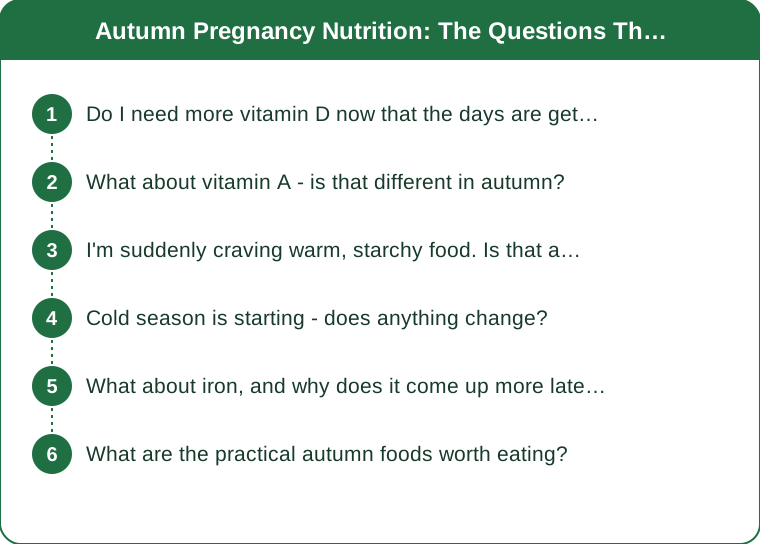
Do I need more vitamin D now that the days are getting shorter?
Vitamin D supplementation is commonly recommended in pregnancy, and many health authorities advise it year-round or specifically through autumn and winter. This is one of the clearest autumn-specific nutrition points.
Why does autumn matter for vitamin D specifically?
The main source is sunlight on skin. At higher latitudes, the sun sits too low in the sky through autumn and winter for the skin to produce meaningful vitamin D, regardless of how much time you spend outdoors. Stores built over summer decline through the darker months.
How much is generally recommended?
Recommendations vary by country. Many health services advise a daily supplement in pregnancy, and higher amounts may be advised for some people - including anyone with darker skin, anyone who covers their skin, and anyone who spends little time outdoors. The specific amount for you is a question for your midwife or doctor, not for an article.
Can I get it from food instead?
Dietary sources are limited - oily fish, egg yolks, and fortified foods - and it is difficult to reach recommended levels from food alone, which is why supplementation is advised rather than dietary change.
Should I get my level tested?
Routine testing is not standard everywhere. If you have risk factors for deficiency, it is worth raising with your midwife.
One important caution: more is not better with vitamin D. It is fat-soluble and excessive intake carries risks. Stick to the amount you have been advised.
What about vitamin A - is that different in autumn?
This comes up because autumn food includes several vitamin A-rich items, and there is genuine confusion about which form matters.
Why is vitamin A a pregnancy concern at all?
High intakes of preformed vitamin A (retinol) are associated with risk in pregnancy, which is why liver and liver products - pâté, liver sausage - are generally advised against during pregnancy, and why supplements containing retinol should be avoided unless specifically prescribed.
Does that mean I should avoid carrots and squash?
No, and this is the point that causes unnecessary worry. Beta-carotene, the form found in orange and dark green vegetables, is a different compound and is not associated with the same concern. Carrots, squash, sweet potato and dark leafy greens are all fine and are among the best autumn produce available.
What about fortified foods?
Most fortified breakfast cereals and spreads use amounts intended to be safe within a normal diet. If you are unsure about a specific product, the label and your midwife are the right sources.
What about skincare with retinol?
Topical retinoids are generally advised against in pregnancy. This is worth mentioning because autumn is when many people restart retinol after a summer break, and it is easy to overlook.
This is general information, not medical advice - if you have eaten something you are now worried about, speak to your midwife rather than searching for reassurance online.
I’m suddenly craving warm, starchy food. Is that a problem?
Why does this happen in autumn?
Several things at once. Reduced daylight affects mood and is associated with increased appetite for carbohydrate for many people. Cooler temperatures make warm food more appealing. And pregnancy itself alters appetite and food preferences considerably.
Is it something to resist?
Generally not. Pregnancy is not the time for dietary restriction, and appetite changes are a normal part of it. The more useful approach is to improve the composition of what you are eating rather than to reduce it.
What does improving the composition look like?
Adding protein and fat to the carbohydrate rather than removing the carbohydrate. Porridge with nuts, seeds, and Greek yoghurt rather than porridge alone. Toast with eggs rather than toast with jam. This steadies energy considerably and is far more sustainable than resisting the craving.
Should I be worried about weight gain?
Weight gain in pregnancy is expected and the appropriate range varies by individual circumstances. This is specifically a conversation for your midwife, who knows your history and can give you a figure that means something.
What if I’m eating very little because of nausea?
Nausea persisting into the second trimester, or nausea severe enough to prevent eating and drinking, needs medical attention rather than dietary strategy. Speak to your midwife or doctor - there are effective treatments and it is not something to endure.
Are there useful warm options that are also high in protein?
Savoury porridge with an egg, lentil soup, chilli, dal, and any bean-based stew. All warm, all substantial, and all easy to batch.
Cold season is starting - does anything change?
Am I more susceptible to infections while pregnant?
Pregnancy involves changes to the immune system, and some infections can affect pregnant people more significantly. This is why vaccination is recommended in pregnancy for certain infections.
Which vaccinations are relevant?
Flu vaccination is routinely recommended in pregnancy in many countries, and autumn is when the programme runs. Whooping cough vaccination is also commonly recommended at a specific stage of pregnancy. Your midwife or doctor will tell you what applies to you and when - this is worth asking about specifically at your next appointment if it has not come up.
Can I take my usual cold remedies?
Many over-the-counter cold and flu products are not recommended in pregnancy, including some very common ones. Check with a pharmacist before taking anything, including things you have taken safely before. Pharmacists are accessible and genuinely useful for this.
Does vitamin C or zinc help?
Evidence for large doses of either preventing colds is weak in the general population. A varied diet covers both. High-dose supplements are worth checking with a midwife before starting anything in pregnancy.
What actually helps?
Sleep, hand hygiene, adequate nutrition, and the recommended vaccinations. Unglamorous and considerably better supported than any supplement.
Should I avoid people who are unwell?
Sensible where practical, particularly for certain infections. If you are exposed to something specific and are concerned, your midwife is the right person to ask.
What about iron, and why does it come up more later in pregnancy?
Why does iron matter particularly in pregnancy?
Blood volume increases substantially during pregnancy and iron requirements rise accordingly. Iron deficiency anaemia is relatively common in pregnancy and is routinely screened for.
How would I know?
You would typically be tested as part of routine antenatal care. Symptoms can include tiredness, breathlessness, and pallor - though tiredness in pregnancy has many causes and is not a reliable indicator on its own.
Which foods are useful?
Red meat is the most readily absorbed source. Plant sources include lentils, beans, tofu, fortified cereals, and dark leafy greens - all of which are seasonal and cheap in autumn.
Does anything affect absorption?
Yes, and this is genuinely useful to know. Vitamin C substantially improves the absorption of plant-source iron - so lentils with tomatoes, or beans with peppers, or a glass of orange juice with a fortified cereal. Tea and coffee reduce absorption, so it is worth leaving a gap between them and iron-rich meals.
Should I take a supplement?
Only if advised. Iron supplements are prescribed based on blood test results, and taking them unnecessarily causes side effects including constipation, which is already a common pregnancy complaint. This is a decision for your midwife or doctor.
What if prescribed iron makes me feel worse?
Side effects are common and there are different preparations. Tell your midwife rather than stopping - the alternatives are often better tolerated.
What are the practical autumn foods worth eating?
What is seasonal, cheap, and useful right now?
Squash, root vegetables, brassicas, apples, pears, and pulses. All at their best price of the year and all suited to the warm cooked format that autumn appetite is asking for.
Are there any autumn-specific foods to be careful with?
The standard pregnancy food advice applies year-round - certain cheeses, undercooked meat and eggs depending on local guidance, liver and liver products, and limits on caffeine and oily fish. Autumn-specific things worth noting: game meat may contain lead shot, and unpasteurised products appear more at autumn markets and farm shops.
What about the seasonal drinks?
Many autumn coffee shop drinks contain considerably more caffeine than expected, and caffeine limits apply in pregnancy. Checking is worthwhile if you are having them regularly.
Are there easy warm meals worth batching?
Lentil soup, chicken and vegetable stew, dal, chilli with beans, and roasted vegetable and grain bowls. All batch well, all freeze, and all provide the warm substantial format without much effort - which matters when energy is low.
Anything for the darker mornings specifically?
Getting outside in daylight early supports mood and sleep, and neither is a small thing in pregnancy. A short walk is worth more than it appears.
A closing note: this article covers the questions that come up seasonally. It is general information, not medical advice. Your midwife, doctor, or a registered dietitian knows your pregnancy and is the right person for anything specific, including anything here that raised a question for you.
TL;DR:
- Vitamin D supplementation through autumn and winter is commonly advised in pregnancy - ask your midwife for your amount
- Beta-carotene from carrots and squash is fine; the concern is preformed vitamin A in liver and retinol supplements
- Warm carbohydrate cravings are normal - add protein and fat rather than restricting
- Ask about flu and whooping cough vaccination at your next appointment if it has not come up
- Vitamin C improves plant-source iron absorption; tea and coffee reduce it
- Check any cold remedy with a pharmacist, including ones you have taken before
This is general information, not medical advice. Your midwife or doctor is the right source for anything specific to your pregnancy.
Keep Reading
This article is for general informational purposes only and is not medical advice. Always consult a qualified health professional for guidance specific to you.